Tag Archives: Writers

Random brushes with greatness

With QuestloveYou know you’ve really made it when people will post pictures of you posing with them on their website, but until then I’ll have to subsist on the other side of the ‘net. This photo is from Friday’s jaunt to Random House, when yours truly got to meet and greet with the likes of Questlove of the Roots. (Note to self: do not wear flouncy blouses when getting pix taken of you. Remember that old piece of advice about the lens adding ten pounds? Living proof.)Pierce Brown Here’s another on of Pierce Brown meeting my hair. He was so nice the next time I go to one of his signings I’m going to bring my face. Justin Cronin Justin Cronin was also very nice, and I found out he’s also a graduate of the Iowa Writer’s Workshop, which to a fellow MFAer like me, that’s right up there with Harvard and Yale.  Also totally appreciated the fact I was blowing off class to see him.  Could you possibly find a better skip day?Anna Quindlen and Lee Woodruff The next one is a really badly-focused picture of Anna Quindlen (left) and Lee Woodruff, but that was really because of my shitty camera-phone, and nothing at all to do with how fab they are in person.

And they were, along with the many other authors we saw that day. So much fun, books, food, chocolate, wine, and hey! I won a Magic Bullet in a raffle. What could be better?

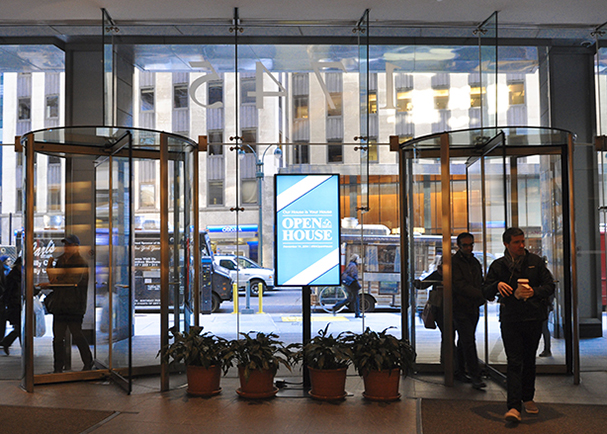
Open House at Random House – Going!

Going to this on Friday. I’m so excited I can’t stand myself. You see there’s publishers then there’s publishers. And then there’s (cue chorus of sopranos) Random House!

Open House is a unique semi-annual event that brings together the biggest names in publishing (Anna Quindlen, Debbie Macomber, and more!) for a full day of interactive author panels and book signings at Random House’s New York offices. Readers get a behind-the-books look at what’s new at this all-inclusive day, which includes breakfast, snacks, lunch, a cocktail reception, and a canvas tote bag full of books and goodies!


  • Questlove

    Questlove

    Author, Something To Food About

  • Melanie Benjamin

    Melanie Benjamin

    Author, THE SWANS OF FIFTH AVENUE

  • Pierce Brown

    Pierce Brown

    Author, MORNING STAR

  • Justin Cronin

    Justin Cronin

    Author, THE CITY OF MIRRORS

  • Debbie Macomber

    Debbie Macomber

    Author, A GIRL’S GUIDE TO MOVING ON

  • Anna Quindlen

    Anna Quindlen

    Author, MILLER’S VALLEY

  • Helen Simonson

    Helen Simonson

    Author, THE SUMMER BEFORE THE WAR

  • Dawn Tripp

    Dawn Tripp

    Author, GEORGIA

  • Lee Woodruff

    Lee Woodruff

    Author, PERFECTLY IMPERFECT

Have questions about Open House at Random House – April 29? Contact Random House

Kicking it off the cliff

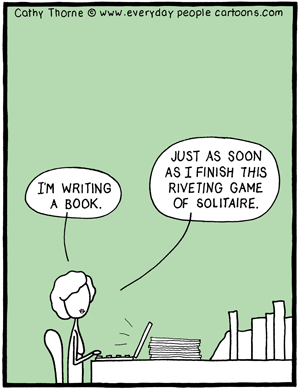
the-endOne of the most depressing days in a writer’s life is when they finish their work-in-progress. You’d think it’d be a James Caan break-out-the-bubbly moment like in Stephen King’s Misery, but truly, it’s more like Kathleen Turner in Romancing the Stone, crying like a baby as she types The End. The latter’s an apt analogy, because there ‘s definitely some postpartum issues going on, and although you feel a sense of release, it’s also pretty scary. Mainly because although the creative part is finished the business end kicks in, and suddenly the kind of terror you’re facing makes that Scary First Page look like all kitty and bunny cuteness. You start going all agoraphobia, freaked at the idea of sending Baby out into the cruel, cruel world, completely certain everyone  will discover you for the hack — or even worse — the fraud, the imposter you are. “Take THAT bitch!” you imagine as another rejection skids into your inbox, “who ever told you you can write?” (actually, a “mentor” once did say that to me, an Iowa Workshop graduate who I now can only remember as Dick.) You start doubting yourself, convinced everything you ever wrote is shit and trash-worthy, and you end up with your ass still in pajamas at 4:00 PM eating Tater Tots and binge-watching old episodes of Family Ties. Pathetic.

Of course, this is the most extreme scenario, and not completely reflective of my reality. I’m fortunate enough to have an agent who believes in my work, and a couple good leads on this new thing. But that doesn’t mean everything I described above hasn’t gone through my head, and it’s certainly nothing I haven’t faced before. (Okay, no Family Ties, but I did recently binge five episodes of Outlander and nearly the whole season of Girls.) The thing is no matter what stage you are in your writing career, you’re not immune to self-doubt and imposter syndrome and the fact that you’re only as good as your latest success. But that doesn’t mean you shouldn’t let go. I did, and as proof–oh what the hell, here’s the first chapter of my latest book to prove it. Go ahead and read it and let me know what you think. Just don’t make me call you Dick.

Writers Anonymous

hand blocking cameraAre you ever ashamed to call yourself a writer? I don’t mean consciously, but when someone asks you what you do, and I’m not referring to your nine-to-five job, do you shy away from mentioning your “shadow” career, only “admitting” it to your closest friends? Or when someone asks you “what’s new?” do you tell them you’ve just finished your latest chapter, or do you toss them non sequiturs? Do you answer your partner’s “What are you doing?” with “Oh, nothing,” even if you’re neck-deep into plotting? Do you consider your writing a guilty pleasure rather than a necessary part of your overall mental health? And most of all, do you write only when you can steal some time away from the “more important” things you have to do? Does any of this sound familiar? If it does then I have news for you: you’re seriously disrespecting The Work.

Easy for you to say, you may be saying. I have a home. A family. Kids. A job.  A cranky spouse. Responsibility! Bills to pay! <Fill in this blank with your bitch.> I get it. I GET IT.  I’m not saying you don’t have any of that. And I’m not denigrating it. You are. And why’s that? Because what you’re telling me is this “secret passion” you have is not important enough for the public. That it’s just some silly little thing you do now and then. And it deserves significantly less attention than your more respectable pastimes, such as checking Instagram on your phone, watching “The Walking Dead,” or hoisting a few on the deck (I may be persuaded to reconsider the last one). And that’s fine–as long as that’s how you really feel. Do you?

Truth be told, I used to. I hid my more creative bent from my friends and family, only indulging in it during what is known as “free time,” which could be exclusive of anything in the world from chopping wood to piloting the International Space Station, as long as it didn’t involve writing. But the thing was, I didn’t write any more or less. I still devoted an inordinate amount of time to my fiction; I just accomplished it after everything else “more important” was finished, even if I had to work late into the night. Then came the ultimate paradigm shift–I began to make money. Overnight my little hobby gained immediate legitimacy. Which forced me to ask myself, Does it take making money before anyone will take me seriously? A big resounding NO, and you know why? Because if I weren’t already taking myself seriously, I would’ve never been able to write well enough so someone else–someone like an editor–would consider my writing worth the risk.

You see, good writing doesn’t spring from your laptop by chance; it’s cultivated. It’s not enough to plant the casual seed and see if something will eventually come up, like so many random chimpanzees at countless random typewriters. It’s work. And if you are, indeed, a writer, my goodness! It’s nothing to be ashamed of!


Master of One

Outliers by Malcolm GladwellMalcolm Gladwell’s Outliers (Little, Brown & Co. ) is not a new book. In fact it’s over eight years old, but it is one that I’ve read lately. As in the other Gladwell books (The Tipping Point, Blink), the author picks a subject and expands on it, or as he explains in his website, I write books when I find myself returning again and again, in my mind, to the same themes. Said theme for Outliers was, and I liberally interpret: Why do some people become successful and others, who are just as educated and innately intelligent, don’t? This is a question I have posited myself, as I have seen some people rocket to the top of their chosen profession while many of their peers struggle and remain perennially in the backfield. So I picked up Gladwell’s book hoping to find not so much answers as explanations, and I certainly received what I was searching for. Not that it made me feel any better. In fact, there’s a simple word to explain exactly how I felt.

Screwed.

As Gladwell theorizes, it’s not how hard you work, but how advantageous you were in where and when you were born, and how the culture in which you developed shaped you. In essence, as hard as some people work to succeed, the vast majority of those who do find success do so aided by circumstances beyond their efforts. Or as the author puts it: …we vastly underestimate the extent to which success happens because of things the individual has nothing to do with. Now, who hasn’t heard the stories? The accountant who just happens to send his resumé in on the day another accountant gets fired, and gets hired, purely out of necessity. The actor who gets to star in a blockbuster film after the first pick for the role turns it down. Or as in Bill Gate’s case, growing up in Seattle the son of a wealthy lawyer whose private middle school, in 1968, was able to afford a unique computer for him, and a few other select geeks, to use on their own. A computer, tied to a main-frame up town, which Bill and his cohorts got to use day and night and weekends and all summer until all they did was program and program and program, until this coding-jones replicated exponentially into Microsoft. My God, how could you compete with those innate set of circumstances? Because part of what Gladwell expounds on, what ultimately leads to Bill’s success, lay not so much in the advantages, as the time he spent perfecting his craft. His 10,000 hours.

Gladwell postulates that in order to be considered a Master in any given field, one must spend a minimum of ten years, or ten thousand hours,  grinding away at it. Bill started out by obsessively programming for almost 1,600 hours in one seven month period. Likewise, the Beatles launched their career by performing in Hamburg, Germany, for 270 nights in a little over eighteen months, for almost 1200 hours. Reading that, I began to feel a little better about myself, as I’ve had my own set slave-driving circumstance. To wit:

You may as well know, I’m an academic.  I have a Master of Fine Arts degree in Writing and  at the time my thesis, a novel, was in progress, I was working on a three-book contact. So, in one ten-month period, I wrote one 80,000 and three 50,000 word novels, as well as several papers, four grant proposals (I minored in grant writing), and two short stories. This is addition to all the ancillary writing that goes along with the business of submission and course requirements, so I spent many a weekend from sun-up to -set still in my dressing gown, gaining my sustenance by anything I could eat with one hand. At times, it wasn’t a pretty sight, but it was always exhilarating and ultimately very rewarding.

The end result is I can drop prose like others drop trou, and now I get to teach people how to do it. I’m not perfect, I’m still a work-in-progress, but I can honestly say I love what I do. And if you can say that, well then, your working days are done.

Boo Effing Hoo – get your ass in the chair

vintage-writer-at-old-typewriterOne New Year’s resolution I’m sure plenty of writers made was finally attempting that full-length novel. For some, NaNoWriMo in November gave them their first taste of what long form writing’s like, as a national novel-writing month forces derriere-in-chair and excuses out the window. But what if no amount of incentive will work? What if you just can’t get in the mood to write?

If you consider yourself a writer, then no one has to tell you about black moods. To a writer, they’re as welcoming as a rejection and as familiar as the backspace. Our black moods spawn as much from those brick walls we face as from the months we spend waiting for an answer, and when we do it’s often nothing we want to hear. Our dismal days are frequently filled with endless rewrites, verbal vomit and dead ends, and the inevitable recalcitrant character who insists on upending the plot. Sometimes when it gets really bad we end the day dispirited and frustrated, cursing our near obsession as we cry into our goblets of pinot noir, gorging on double-chocolate brownies and tater tots.  ANYWAY, this writing life can sure enough get you down now and then, no fooling. So what’s a sullen scribe to do?

Milk it, I say. Milk it for all it’s worth, right down to the quick until it’s pink and screaming. Believe it or not, your darkest days can bring out some of your most illuminated writing, as you dig into the depths of your rawest emotions. You need to write a scene where your protagonist loses the love of his life? His job? His home? His space in line for the newest iPhone? Drag yourself to your keyboard and lose your troubles in his, as pouring all that angst into your prose will make it so much richer and realistic, not to mention the cathartic bonus you’ll get out of unloading it all into some unwitting character. The same thing can work in reverse, too. Write your heroine falling in love on the day you finally nail that job, fit into those skinny jeans, eat a perfect peach. Works really well when you’re angry, too, letting that poor, downtrodden patsy finally give the bully his due as he lands a left dead-on his fictional jaw. Hey, it’s better than shoving your own fist into the sheet rock. It’ll save you a ton of dough in repairs, leaving more money to spend on pinot noir, tater tots and–oh, we’ll just leave that up to our very fertile imaginations, now won’t we?


Writers’ little helpers when the caffeine ain’t enuf

drugs-blogBy Grant Snider via GalleyCat and James Boog. This speaks to me, especially left-center, though I’m sure you writers out there can draw from it what you need. The New Yorker cuts worse of all. But still, I’m addicted. Heaven help me!


Ready…set…brilliance!

Vintage+woman+office+type+writerRecently I had shown my students several different ways to begin an essay. Instead of staring dumbfounded at a blank page (that is, if you’ve been blocked from echeat.com), I presented them with a few different starting techniques, such as posing a question, telling a story or exposing a fault in logic to name a few. Later on it led me to ponder what’s really the best way to launch a book? I’ve tried several techniques, but is there one sure-fire way?

After you’re writing for awhile you begin to settle into a few characteristic ways of doing things. Eventually they’ll be known as your “style.” Whether it’s a turn of phrase, a sense of irony, a humorous bent or any number of things indicative of your method of storytelling, your readers will recognize it and hopefully love it enough to come back to your work over and over. One of the most important indications of your style will be your opening, perhaps even your very first line. Depending on the genre, the opening is often approached in various ways, but I’m of the firm belief it should grab your readers from nearly the first line.

I once heard a comment from a genre writer that literary fiction is usually depressing.  Not that l believe this is true–I don’t–but one of its characteristics is a more variegated writing style that often takes longer to open. Many times the introduction is an unfolding, an intricate depiction of a landscape, situation or character. It could be more obtuse than easily recognizable, its meaning shaded by metaphor or symbolism. Often there’s an unreliable narrator or the characters appear doomed from the onset. The overall pace can be slower as there’s a lot more emphasis on the way something’s said, rather than on the speedy advancement of the plot. In fact, often there is no resolution, the story left open-ended so we could draw our own conclusion.

Not so much in genre writing. The lovers find their happily-ever-after, the mystery is solved, the planet is saved from destruction (actually, I don’t really know what happens in scifi; I’m just applying a happy ending with an intergalactic bent). And all this is initiated at a faster pace. Readers want the lovers to meet, the victim to die, and the alternate universe to appear as soon as possible. So how’s this accomplished? Why not try to–

Start in the middle – Forget the backstory and jump right into a situation already in progress. The cat’s up the tree, the car’s hit a pole, the cad’s been caught with the hussy–it’s all in your face and your protagonist hasn’t a clue how to deal with it. Dump them into a situation that’ll be hell to fix while sprinkling in backstory as the plot progresses. Think breadcrumbs along a trail.

Eavesdrop – Someone’s arguing or confessing or dishing over drinks, and there you are, a fly on the wall, privy to a candid conversation. Drop in a minimum of milieu and let your characters tell your readers what’s going on through their dialogue. Watch being overly explicit about what you say, though. Too much detail and your casual conversation can come off as an information dump. Divulge on a need-to-know basis.

Begin with the ending – One of the best examples of this technique is the 1950 movie classic by director Billy Wilder, Sunset Boulevard, starring Gloria Swanson and William Holden. The movie opens with Holden’s body floating face-down in a Beverly Hills mansion’s swimming pool, and in his own voice he tells you how he got there. It’s really not as anti-climatic as it seems as you’re dying (sorry) to know how he got that way. And if you apply this to writing a book, hey! they’ll be no angsting over how to end it.

That’s a just a few ways, and I’m sure there’s many more, but one thing’s for certain. If you don’t give your readers something to grab onto, they’ll be nothing to keep them turning the pages. The sooner you get them hooked, the easier it’ll be to pull them into the story and all the way through to the end.

Pimpin’

secretary20pinup8dnDear Editor,

I simply must tell you how fantastic you look today. I know your job is tough and you’ve been relentlessly busy, but honestly, it doesn’t show. You look fabulous. Quite the contrast to me as I’ve been working my fingers to the bone. Have these creative synapses been sparkin’ and how!

But that’s the way I roll. Banging out the genius day and night, living, eating, breathing. Sometimes it’s hard to contain but I eventually get it down. Love the pressure, too. I live for the deadline. Haven’t missed one yet. See, I’m all about honor: honoring deadlines, honoring advice, honoring the miraculous fact there are people out there who honestly want to read what I have to say. It’s an awesome concept. One I wouldn’t dare take lightly. Insert derriere in chair, remove pretension. And never, ever forget you’re only as good as your latest.

I would like you to believe I’m worth the risk. I’d work hard for you. I’m seasoned. I deliver. If there’s anything I believe it’s writers write. It’s what I do. I just can’t help myself. If there’s a writer’s dominant out there, I’m his bitch. See for yourself. You won’t be disappointed.

By the way, have I told you how fabulous you look today?

Many thanks,

Gwen Jones

Look up and shut up

IMG_2766In a odd spate of convergence this week, my freshman students have an essay due based on the observations of writer and MIT professor Sherry Turkle, whose editorial appeared last Sunday in The New York Times.  It’s Turkle’s contention in “Stop Googling. Let’s Talk,” that students as well as adult smartphone users should ask themselves the question, “What has happened to face-to-face conversation in a world where so many people say they would rather text than talk?”

Turkle uses data from a 2015 study by the Pew Research Center,  stating that 89 percent of cellphone owners said they had used their phones during their last social gathering, even though 82% percent of the same adults felt using them somehow took away from the conversation. Counter that with the “rule of three,” or how  a group of college students Turkle interviewed handle the use of devices in social settings. While conversing with six or so people at dinner, “you have to check that three people are paying attention — heads up — before you give yourself permission to look down at your phone. ” The idea is you can continue to converse “but with different people having their heads up at different times.” Turkle contends that this “rule of three” tends to keep conversation light, focusing mainly on topics where people feel they can drop in and out. By following the rule, the students say, ” You never have to be bored. When you sense that a lull in the conversation is coming, you can shift your attention from the people in the room to the world you can find on your phone.” But students also lamented the downside. As one college junior put it, “Our texts are fine. It’s what texting does to our conversations when we are together that’s the problem.”

Yet if you’re a writer, it’s not only your conversations that are suffering. Your writing is suffering, too. Because if all your talking is fluffy and all your observations are out of Instagram, Twitter, or Google, chances are your writing is as deep and as substantive as Jell-O. I once had someone ask me why a writer would interview people when she could get the same information online. Could she? Then from where did that information spring? From the info pixies? Too many of us rely on “research” done via online, because too many don’t want to do the heavy lifting that comes with face-to-face or real world interactions. I know of one popular writer of 19th century historicals who worked around this by first writing the book, then doing a quick online fact check before submitting. This same writer had an actual book published with a scene from the 1860s that featured a telephone.  You could say that a simple Google search would have corrected that in a snap. But how could it when the writer didn’t know enough about the era to know what to check?

The point is a writer needs to be observant, to turn his or her attention away from the virtual and into the world going on around them. Honing the art of observation is the first skill a writer needs to master before they could ever strike a key to start a story. Ask yourself: Is Wikipedia is the first place you turn to for research, instead of that hot history geek bartender spouting random facts as he pours your Guinness? If it is, then maybe you need to look up from Tinder instead of just sitting there swiping left.