There’s still time to register! What are you waiting for?
 Click here to register!
How did you get along without it?
There’s still time to register! What are you waiting for?
Click here to register!
 Fabulous fiction writing (you know, like the kind I do), just doesn’t magically appear on the page. It’s built around a frame of six major elements, each one essential to the over all narrative. Want to know what they are? I thought you’s never ask!
The Six Major Elements of Fiction
Conflict – Plot usually involves one or more conflicts, which are problems that need to be solved. The “movement” towards a solution is what drives the narrative forward, and is what occupies most of the protagonist’s time. The more rewarding plots are often built around mental, emotional and moral conflicts. Plots involving physical conflict, war, exploration, escapes often contain the most excitement and suspense. Here are the major types of conflict:
The first three types are said to be external conflicts, while the last one is internal.
Got it? Now get writing!
 Being a member of Liberty State Fiction Writers affords me the opportunity to go to a great writers conference each year (ours), and to also meet up with editors and agents. Although I’m fortunate to already have a literary agent, there’s always the chance to meet up with editors and other industry professionals, and this affords a lot of opportunities. Like finding out who is buying what, current market trends, new authors and hot titles, and too many perks to mention here. I must say that going to a writers conference that offers chances to sit down with editors or agents, gives you an edge in scoring one if you already don’t have one, or even if you do, and are looking for alternate routes to sell. This year’s LSFW conference on March 24-25 has a great line-up of industry professionals, affording writers a chance to pitch in person. And take it from someone who sold a series of books this way: nothing is better than meeting up in person, so an editor or agent can connect a face to a project. Here’s the line up so far coming to this year’s Liberty States Conference:
Attending Editors
Attending Agents
Appointments will take place on Saturday, March 24, 2018. You must be registered for the conference writers track to be eligible for an appointment. They are assigned on a first come first serve basis, so be sure to register early. Don’t miss your chance to pitch your book to one of our exciting collection of industry professionals. See Liberty States Fiction Writers Conference page for more info.
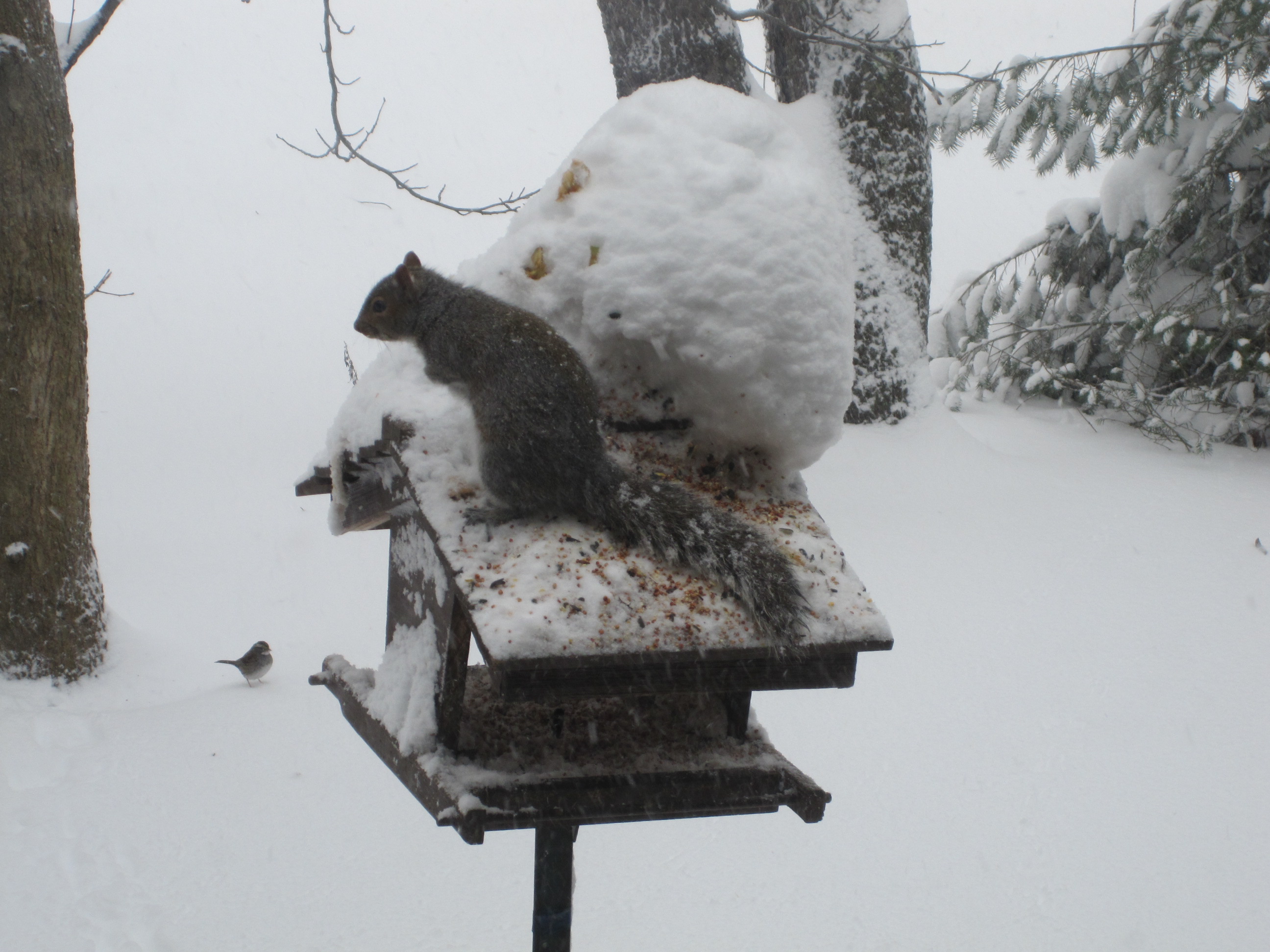 It was sunny and clear this afternoon in New Jersey, and unlike the photo to the left, snow-free. (Though that’s to change soon as a blizzard is barrelling up the coast) The wind was relatively calm, and from my window I could see all kinds of birds pecking at the feeder and except for the barren vegetation, it could have been almost be anytime of the year. But it isn’t, and I don’t need to step outside into the low-twenties chill to feel the hollowness of the season in my bones. After the choreographed optimism of the New Year fades into the mundane, what are we actually left with? Only the anti-climatic yawn of the Dead of Winter and the ennui that follows.
Maybe it’s just a sugar crash after all those Christmas cookies, but last fall’s good intentions and best laid plans now seem as sensible as earmuffs in August, and you’re left staring at a whole lot of letdowns. What happened to that get-up-and-go, those ideas that seemed so workable, those plans set to be implemented as soon as the everything got back to normal, post-holiday? Instead, you’re quickly finding out that things don’t really change, that everything goes comfortably back to the way it was, or more often than not, gets just a little bit worse. You’re finding yourself just a little more broke, a touch fatter, a tad less cheerful and a whole lot lazier. A stretch on the sofa feels more natural that an extended stretch at laptop, and when you do find yourself in front of a screen, it’s more likely for Netflix than for fixing that severely flawed manuscript.
Not that you haven’t tried. To fix that manuscript, I mean. But everything you seem to write is crap. As it was the last time you looked at it just before Christmas. When you told yourself you’d make it better next month. When you had more time. When everything calmed down. After the New Year. When all that holiday hoo-hah is behind you and you can finally think again. In January. Because in January the Universe presses the big RESET button and all wrongs get righted, everything gone down goes up, all promises are kept. When the Muse of Inspiration suddenly infuses us with glorious plot threads, miraculous turns-of-phrase and endings so sock-blowing that ever-elusive editor you queried back in the fall suddenly jumps from your proposal and screeches “MY GOD! THIS IS GONNA MAKE US MILLIONS!”
As if. So what to do?
Beats me. I’m depressed, remember? Deads of Winter tend to breed brain-deadness. Or at least that’s how it feels from here. All I can offer is this isn’t my first Dead of Winter, that I’ve made it through several, and there’s just something about January that breeds contempt. And invariably, things do pick up by February. Maybe it is all that holiday crap we ingested and like a six-year-old on Halloween night, we just need to sleep it off.
Here’s hoping. Back to work….
 Okay, I’m a big fan of Outlander. Not only the series on Starz, but of the books, as I’ve been reading them since a few years after the first book (named Outlander, oddly enough) came out. I had met series author Diana Gabaldon years ago at a cocktail party at a New Jersey Romance Writers’ conference, where she was so kind to explain to me just how she wrote one of her more grisly scenes (the memory of it and how my stomach lurched, will be better left unwritten at this juncture thankyouverymuch). She was very charming and personable, and years later I had the chance to encounter her again in New York, this time at a Random House Author Breakfast. It was there she disclosed for the first time that just the night before, she had finalized the contract for the Starz Outlander series, to excited gasps from her rabid fan base sitting in the audience, thrilled that Jamie and Claire would finally come to life. But I wonder ever since that day how many of her readers have been disappointed? Because how much is really lost when characters–and storylines–jump from the page to the screen?
I read a romance once where the author stated in her forward that she based her two lead characters, a pirate and a spoiled and screeching noblewoman, on George Clooney and Nicole Kidman. Really? The debonair Clooney as a peg-legged arrrrgh -ing privateer? The elegant Aussie as a continual pain-in-the-ass? Didn’t help that all they did in the book was fight. Just didn’t wash for me, especially since I saw Clooney and Kidman as having zero chemistry. But that was beside the point. I resented the fact I was being directed to imagine a character in a certain way, rather than to let their deeds and actions unfold in my own mind as to what they really were about. When I read a book, it’s should be my interpretation of the writing, not that author’s. That’s why there are book discussion groups, as every reader has a different impression of the author’s vision. And in when a book jumps to a screen small or large, that vision is then ceded by the author to the screenwriters and ultimately, the director.
Every Monday morning I read the Outlander recap in The New York Times and invariably, there’s someone bitching about how much the show is missing/has changed/has been altered from book to series. There’s some changes I’ve liked, there’s some that I’ve questioned, there’s some that I outright hate. Comments say the book is so much better, and some, who’ve never read the books, suggest avenues the characters can take. Those who are like me, enjoy it for what it is. I can live with both because I’ve experienced both, and I see each for what they are. As a writer, I know when I put my work out there, my characters are bound to be altered by each person who reads my story, as each approach it with different life experiences and expectations.
But that’s the chance we take when we become writers, as it’s nearly impossible for our vision to be transferred unaltered into another person’s brain. The best we can hope for is it’s intact enough to remain enjoyable and worthy enough to read. And that enough people end up reading it to end up transferring it from a Kindle into a more widely-distributed screen. Or so we hope.
Mark Your Calendar for the 9th Annual Liberty States Fiction Writers Conference!
Saturday, March 24 thru Sunday, March 25, 2018
at the Renaissance Woodbridge Hotel in Iselin, NJ
Whether you’re indie published, traditionally published, not quite published, or simply love to read, we have something for you. Join us for this exciting, fun, and informative event!
The Liberty States Fiction Writers Conference features a line up of more then 20 authors and industry professionals who will share their expertise and experience. Located a in New Jersey, just a short train ride from New York City, we offer a weekend of education, networking, and fun in a relaxed setting.
Registration is now open. Go here for more information on workshops, editor/agent appointments, and guests.
 According to their website…
National Novel Writing Month (NaNoWriMo) is a fun, seat-of-your-pants approach to creative writing.
On November 1, participants begin working towards the goal of writing a 50,000-word novel by 11:59 PM on November 30.
Valuing enthusiasm, determination, and a deadline, NaNoWriMo is for anyone who has ever thought about writing a novel.
National Novel Writing Month believes in the transformational power of creativity. We provide the structure, community, and encouragement to help people find their voices, achieve creative goals, and build new worlds—on and off the page.
Ready to start planning your November novel? Our NaNo Prep resources are here for you.
During October, they’ll provide resources to inspire, challenge, and prepare you to write that novel.
Look to their blog, forums, Facebook, and Twitter for updates on new stuff.
Sign up and get ready to write!
 Without interesting characters, there would be no reason to pick up a novel, as humans are all basically voyeurs, and our most favorite pastime is observing each other. With a good read we can get inside an imaginary human’s head, see what makes them tick, understand their flaws and foibles. So beyond what physical descriptions can tell us about our characters, what can we do to make them alive and breathing, especially considering some modern schools of thought decry physical descriptions at all? Let’s take a look at this “Checklist on Creating Characters,” taken from David Starkey’s Creative Writing – Four Genres in Brief (Bedford/St. Martin’s, 2009), a terrific textbook I’ve used in my Creative Writing classes:
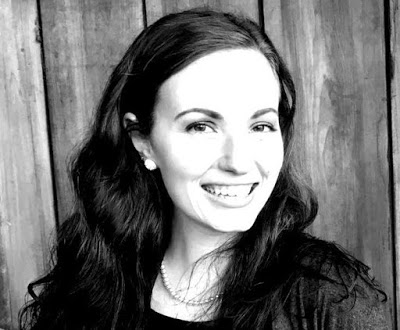 While I was perusing one of my favorite writing-related sites, Publishing and Other Forms of Insanity, I came across some brandy-new agents who are actively seeking clients and lo and behold–one of them is from the agency that represents moi! Her name is Meg LaTorre-Snyder of Corvisiero Literary, and here’s the skinny on who she is and what she’s looking for…
Meg LaTorre-Snyder is an editor and writer with a background in magazine publishing, journalism, medical writing, and website creation. With her background, she’s excited to have a hands-on editorial partnership with authors. She has written for digital and print publications on a variety of topics, including book publishing, writing how-tos, nutrition, healthy living, startup companies, and pharmaceuticals. In her free time, she enjoys working on her own adult fantasy manuscript, reading long novels, drinking tea by the bucket, running in competitive races, participating in musical productions, playing basketball, and reading nutrition textbooks (yep, textbooks). To learn more about Meg, visit her website, follow her on Twitter/Facebook, and subscribe to her YouTube channel, iWriterly.
What she is seeking: YA, NA, and adult:
Fantasy
Historical fiction
Romance (with magical elements)
Space opera
Steam punk
Thrillers (with magical elements)
She loves books written in third-person with multiple POVs, quirky, realistic characters, and rich descriptions.
Meg is not interested in nonfiction, picture books, contemporary stories (particularly those with no magical elements), erotica, horror, dystopian, screenplays, poetry, short stories, and novellas.
How to Submit: Send your query, first five pages, and 1-2 page synopsis in the body of an email (no attachments) to query@corvisieroagency.com with the following information in the subject line:
Query for Meg: [TITLE OF MANUSCRIPT IN ALL CAPS], [age group], [genre]

