
You thought I forgot, didn’t you? Like nearly a whole semester has gone by with nary a mention. Well no I didn’t! What follows is a discussion on loving the author, but maybe not loving the work. The bone of our contention was Of Love and Other Demons by Gabriel Garcia Marquez. No one’s perfect after all, not even literary icons!
There are several things that struck me when reading your critique of Garcia Marquez. The first thing is you can love the author, but you don’t have to love everything they write. To use a cliché, you don’t have to hit a home run every time—on both ends. There are reasons for this, one of which is the perks of being a literary icon. This being one of GM’s later works, after several critical and commercial successes, after winning the Nobel Prize, his publisher more than likely gave him a no-edit clause. Quite literally, they will publish every word the author writes. The author becomes their own editor in the sense that they have the final say over what stays or goes in the work, as their work is considered beyond “fixing,” and that people will buy anything he’ll write anyway. Only big authors get this privilege, and I’ve seen some of my favorite writers go this route to the point I couldn’t read them anymore. Take one Ken Follett.
Back in his prime, he was one of my favorite writers. Not for his deep literary talent, but for pure escapism. His genre was historical thrillers, and he wrote several novels set during WWII, two of which The Eye of the Needle and Night Over Water, kept you on the edge of your seat with every turn of the page. They were novels you’d read far into the night, mainly because you simply could not put them down. Then his success led to a no-edit clause. The first book I read after that I couldn’t get 50 pages in. It’s been years, but I haven’t read anything by him since.
What struck me next doesn’t have so much to do with Garcia Marquez as with how much you’re learning about magical realism. You’re discovering what works and what doesn’t, or rather what works for YOU and what doesn’t. As you read, you’re also developing your own style, as what you would write if it were your own book. I read with interest your synopsis of the work, as it boiled it down to the elements that stood out to you. From what I could gather, it lacked the enthusiasm of when you really enjoy something (as with Beloved — and oh yes, did you enjoy the firestorm the book caused in the recent gubernatorial election in Virginia? Guaranteed 99.99% of the complainers didn’t read past the first page). Another thing that struck me was the blatant symbolism in it. Calling the protagonist Sierva, at least an Anglo play on the Spanish for servant servidora. Then there’s her hair being a symbol of freedom, and how hers is shorn. It reminded me of the fairy tail, Rapunzal, whose long hair kept her captive in a tower. Irony, maybe?
Again, we don’t have to love everything from a beloved writer. We can allow them a few misses in their entire body of work. But as I pointed out you can still learn from them, and if that’s not what to do, if we can hone our own style out of theirs, then a lesson learned is a lesson learned.
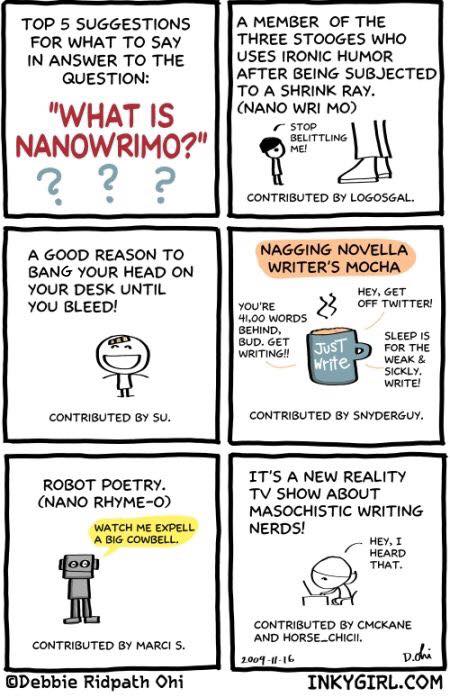


 Hey! I know it’s been a long time, but you know, it was summer and I was busy hanging out, sleeping late, and going to the beach. So now it’s back to business and I’m back to teaching and working on my latest project. There’s big changes afoot, and I hope to have something big to disclose pretty soon now, and you know I will absolutely let you know when I do. For the present, I’m attending various writing events, including next month’s Liberty State Fiction Writers’ Conference in Clark, NJ. If you must absolutely know more about it and would like to attend, there’s a limited number of tickets available, so go


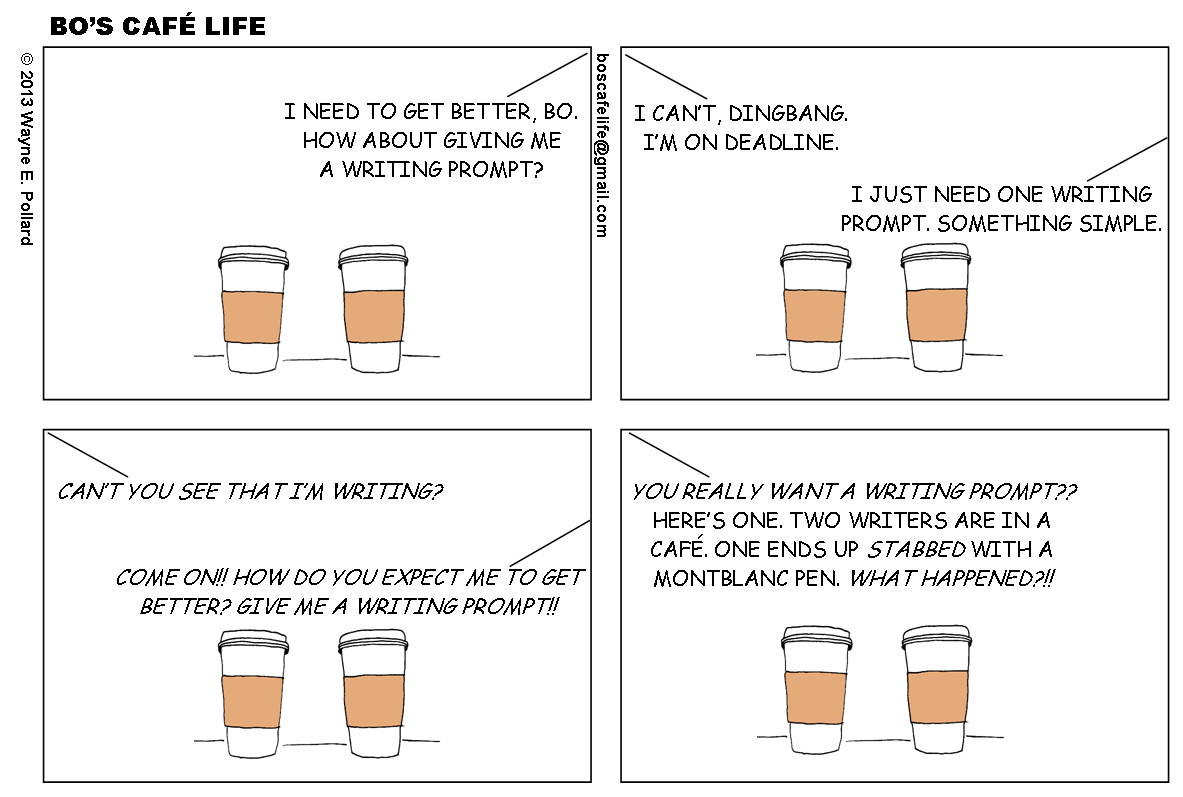


 All right. So I’ve finished another book. I submitted the manuscript to my agent and suffered the indignity of writing a synopsis (which, thankfully, are much shorter now, lessening my agony). And today, I even went the extra mile of sending along an overview for a series of other books based on my first book’s theme. So what do I do now? Pop a bottle of champagne and smoke a cigarette like the Paul Sheldon in Stephen King’s Misery? Uh, no. I still had to work up syllabi for my two summer classes (this is how we professors enjoy our time off), answer emails, work out, feed the cat, make dinner, etc. Then figure out where I’m going to take this thing next, and what I’m going to do with the next thing. Because let’s get real, peeps. The work of a writer is never really done, not if you want to call yourself a writer.

