Tag Archives: writers block

Grrrrrrrrrrrrr…

Woman shouting in surprise

I’m always writing something. If it’s not this blog, I’m jotting into my journal (yes, paper, I still have one of those) or slaving away on one work-in-progress or another. While the first two are usually seat-of-my-pants entries, which to me, are about as much effort as launching into a brand new box of Skinny Cow Chocolate Truffle Bars  (have you had these things? Almost orgasmic, and a ridiculous 100 calories! With NO artificial sweeteners either!!), lately my WIP has been leaving me somewhat frustrated. Granted, I’m not very far into it, only about thirty pages or so, but I’ve been so stuck on minutiae, examining every word and phrasing, that I’m hardly making any progress. Seems I just keep picking it apart and rewriting over and over, staring at it so closely and critically I can practically read the coding on the screen. I’m telling you, my inner editor has gone off the deep end, and it’s nearly driving me nuts. What’s a writer to do?

First, a little self-criticism, followed by a bit of analysis. Editing, intrinsically, is always a good thing. Seat-of-the-pants writing, or as I like to refer to it, verbal vomit, will only take you so far. It’s like making popcorn: you always end up with a lot of old maids (talk about an anachronism, but you know what I mean). If you don’t get rid of them, you’ll end of breaking your teeth, and in your writing, your rhythm. I tend to edit often as I write, re-reading line after paragraph after page in each writing session, and more often than not, I find a lot of superfluous prose I can trim away. Ultimately come up with cleaner, more elegant writing. The problem arises when the editing impedes me from getting further into my story, and I end up shaping and reshaping the same piece of clay so to speak, which is where I’m finding myself now. Why in blue blazes am I doing this?!

Now comes the self-analysis part. I’ve determined there are a few factors. I’m thinking because of school my writing schedule is a bit more erratic,  so I’ve sort of lost my momentum.  But I’m hardly one of those people out there who say they’re too busy to write because, personally, I never understood that. Usually I’m too busy not to write,  as I’ve always found it a challenge to snatch blocks of time I could devote to writing, whether in the early morning hours, during breaks between classes or somewhere between dinner- and bedtime.  As is the old adage: if you want something done, give it to a busy person. Applies to me, because truly, I’ve never missed a deadline, and I always get things done. So why now?

Perhaps it comes down to self-confidence, and maybe I’m lacking a bit at the moment, which I’m sure all writers wrestle with now and then. Sometimes we lack the conviction it takes to be confident in our abilities, and since writing is such a lonely exercise, it’s not as if we have a boss or coach standing over us prodding us on. Or maybe I’m a bit cowed by that Great Unknown that lies beyond those obsessively crafted words, but how will I know how truly wonderful I am if I don’t move past them? Writing means many different things to writers, but don’t let anyone ever tell you it doesn’t take courage to bring out in the open what we’ve created so deeply within us. Sometime I think it takes the courage of a soldier. And yet, we still do it, don’t we?
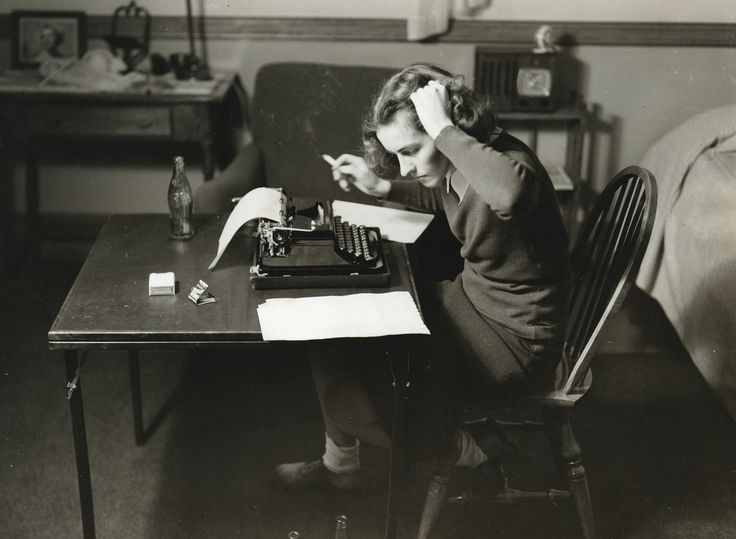
 

Frustration, you ol’ sycophant

22bdcd424ceaf4cf9d7b2f114d7e462dIf you’re going to call yourself a writer, then please acquaint yourself with the meaning of frustration. There’s so many applications and levels of it, the longer you contemplate the word, the more varied the strains. There’s the frustration you feel when you start, with your characters, the opening line, the title, the voice. Then there’s the continuity, the plotting, the criticism you get when you get cocky enough to let someone take a peek, or when you have to toss out a whole chapter because your research was flawed. Then you get to the inevitable saggy middle where you get frustrated trying to dig yourself out of a black hole, and when you finally do, you find that half of what your wrote has to be rewritten. Then as you’re sliding down that slippery slope to the mandatory Dark Moment, you find it’s more café au lait than espresso, and you’re going to have to turn that Everyman into a bastard if you’re ever going to make your plot believable. But nothing’s worse than tying it all up at the end, when in order to avoid that oh-so-easy Dickensian conclusion, you have actually have everything make sense, which, let me tell you, is about as easy as straining tar. Still, somehow you eventually make it all work, and before long, you’re exhaling a big sigh of relief and typing the end. But isn’t all the cruelest cut of all, because then is when the real frustration begins.

Rewrites, edits, proofreads, rewrites, edit, edit, edit. Format. Submit. Reject. Submit. Reject. Submit. Reject, reject, reject. Beat yourself up. Tell yourself you suck as a writer, spend the next three days binge-watching Family Guy and eating tater tots and canned frosting, until you can’t stand it any longer. So you pick up that paperback that spent more time being hurled against the wall than in your hands, but which ultimately restores your writing mojo through its horribleness when you cry, “I can fucking do it SO much better!” ignoring, of course, it spent three months topping the New York Times List. (Sigh…there’s JUST no justice in the world, is there?) So what’s a writer to do?

Listen, sweeties, if you came here looking for answers, I honestly don’t know what to tell you. Except maybe if you’re going to call yourself a writer, you just might as well get used to frustration. As patronizing as it sounds, you’re also going to have work around it if you’re ever going to get anywhere, so you might as well just keep writing. Though you should remember that just because frustration is a writer’s constant companion, it doesn’t mean you have to make it your BFF.

Hang tough, stop bitching, ass in chair. Writer’s write, after all.

Turn that Sagging Middle into a nice comfy Hammock!

A Lover Finds His Lady Fair Swinging In A Hammock ThereYou know how easy it is to start a book? There’s that terrific premise you’re dying to get down on the page, plus those fabulous characters you’ve fashioned, to whom you’ll feed just the perfect opening lines. My books usually open right with the action. I hit the group running and it’s off to a rip-roaring start. But sometimes it happens I get to page 150, and my characters are metaphorically gasping for breath, not from where they came from, but in anticipation of where they’ll end up. It’s like their train is barreling toward the station, but I don’t know which track to send them on to get them there. So what should I do? For advice I like to turn to a book that’s helped me numerous times in the past, The Art and Craft of Storytelling by Nancy Lamb ( Writer’s Digest Books, ISBN 978-1-58297-559-7, $14.99). She says to travel the length of your story grab hold of the throughline–the driving force of your book you can set up as soon as the opening line.

According to Nancy Lamb’s Tricks of the Trade: Before the end of the first chapter, make an effort to set up the primary throughline of your book. By creating a natural trajectory for your story’s development, the plot will unfold in a more organic way, and you’ll feel more comfortable in moving forward. This is also insurance against getting sidetracked. You can set up your throughline in an outline, or you can wing it. Either way, make the effort to establish this critical introductory plot point from the beginning.

Did I do that? Well, I know where my characters were in the beginning, and I know how I want them to end up.  Okay, let me adopt this theory to a well-known story: The Wizard of Oz. The only thing Dorothy really wants is to get home. So everything that occurs to her after she lands in Munchkinlad propels her towards Oz which, in theory, will get her home. So what’s my guiding force? And how does that guiding force contribute to the forward motion of the story? If it doesn’t, it should. Because if it doesn’t, then it’s quicksand. And it’ll keep me stranded in the sagging middle.

If you’re stuck, perhaps you’ve lost sight of that. Or perhaps you’ve just been too bogged down by the prose, trying to tweak wordage and phrases, when you should be concentrating on the story. Therein lies the danger of constantly editing: details can always be fixed later, but a main plot thrust should always command your attention. Not that a little re-reading isn’t in order, especially if you’ve lost the main plot point of my story. So in times like these, when we can’t see the forest for the trees, the only thing to do is go back to square one. Maybe it’s time to pay a quick visit to that magical beginning, and remember to drop bits of it like breadcrumbs on the way back and all the way through to the end.

Back to work!

Spring Illin’

popup-3_0Last week I was as sick as a dog. (Tell me: where did that analogy spring from anyway? Because if sick = dog, then my neighborhood should be a pandemic site.) My affliction ran the full gamut of misery: fever, chills, aches, head congestion and general all-over-shittiness, and from so much coughing and sneezing, this week I threw out my back. So it’s another week of not being up to a hundred percent, and now it’s thirty-eight degrees out and raining. Add to this one hell of a winter hangover which seemed to put all progress in reverse, and I’m finding it hard to get out of bed in the morning, let alone work on the book which I recently started. Put it all together and I’m decidedly in a funk, and wondering how to get my motor started when so much of the world is working against me.

(My goodness, I’m depressing. Now write yourself out of that hole, Gwen. Go ahead. I’m waiting.)

It’s very easy not to write when you’re feeling bad, actually too easy. Your brain gets preoccupied with everything that’s messing up your day, and it become almost mandatory to dis your routine for social media or TV, twin junk foods for the distracted mind. Kind of like when you have a bad day at work and you head right for the Doritos, a balm for the belly that actually works against you, especially after you realize you just inhaled 3000 calories, and you don’t even like Doritos. So how do you counter these counter-intuitive measures? How do you write when writer is the last thing you feel like? One thing I’ve found out about myself is I feel worse when I don’t write, that the act of writing itself gives me a feeling of self-worth unlike any other practice I partake in. The only thing that comes close is teaching, perhaps because both involve the dissemination of information uniquely my own. Maybe because as writers, we are innately messengers, and this need to communicate is what puts us in touch with our reality, giving us validation. Really? Is that what we need? Must be true, because why would I feel so bad when I’m not doing it? I mean, seriously, who feels bad when they’re not hitting their thumb with a hammer?

Man, writers are strange. But that’s why you love us so much, right?