All posts by Gwen Jones

Rejection, you old bastard

Writers Write!The other day I received in my inbox one of the most eagerly unanticipated of emails – the dreaded rejection. It wasn’t my first, and it most certainly will not be my last. In fact, it was another in a long, and happily broken line of such letters, which at this point in my career, totals well over one hundred. Through the years I’ve received all kinds, reaching back to the pre-electronic era: my own typed query with a rubber-stamped REJECTED across it, thrifty pre-printed postcards tucked into my SASE, crookedly off-centered-Xeroxed form letters, flyers inviting me to partake in the purchase of 1) editorial services, 2) how-to books, 3) seminars, even one with a large NO scribbled across the body of the letter. Of the electronic variety, I’ve received mainly cut-and-paste form emails, some three months after I submitted, to one within the hour. Several of these, especially of late, have been what is popularly known as good rejections, dismissals of a more personal nature, where the sender comments on what they liked and disliked about the work, more often than not praising the writing, but not “falling in love” with the story. Often the sender will point out the subjective nature intrinsic to all rejections, and wish you “the best of luck in finding a home/editor/agent for your novel/project/work.” Although rejections of this ilk are often sent with the kindest of cuts, because of the higher level of expertise the writer has demonstrated by the point, they’re usually the toughest rejections of all to take.

I’ve seen many a writer crumple in despair over such rejections, burn their manuscripts, erase their hard drives, lose themselves in a blurry of cheap liquor and even cheaper chocolate (yours truly suggests burrowing into a Himalaya-size pile of Tater Tots). Many vow to give up writing for good, and sometimes many do, at least temporarily, and often that’s a good thing. Because once the hurt and the anger and the self-deprecation subside, the writer can take a step back and look at the work objectively. Subjectivity aside, editors and agents, more than anything else, are professional readers, and if the work comes back over and over with similar commentary, maybe it’s time to take a look at that particular aspect of the story. In the same vein, the writer also has to consider where the work was sent and the editors’/agents’ preferred genres. Are you submitting mystery when the agent’s preference is sci-fi? Have you sent a novel query to an editor who usually publishes self-help? Have you taken a look at the agent’s clients? The editor’s list? Have you read the acknowledgement pages of works similar to yours to see who the author is thanking? You have? Then good, but let me ask you this: do you have multiple queries out there, or are you placing all of your literary eggs into the basket of one editor/agent?

If you are, you are most certainly setting yourself up for disappointment. Submission should be a very fluid process, and sending to one editor/agent at a time is akin to hitting a stop sign on every corner, causing your writing to lose momentum. For the most part, your writing life should have two very distinct entities – the creative and the practical, and as hard as it is to separate one from the other, the two should never align. Plus if you have multiple queries out there at once, the random rejection tends to lose its sting, and the dismissing editor/agent diminishes in importance. But most of all, you should never, ever let a rejection sink you so low that you lose faith in your abilities, a point where I’ll admit I have found myself. Instead of wallowing in dejection, ask yourself this: Who are these people who wield such power that I allow their judgment to supercede mine? Confidence in your talent will show through in your work, and you should always be exercising your writing muscle. As I tell my students, writers write, and no one was more surprised than me by my reaction to that latest rejection. Sure, it rattled me, but all I could think about was finishing the chapter I had been working on, which I did before I went to bed that night. To me, that meant I had lived through one more rejection, and had come out the other end, still a writer.

A while ago, when I was less confident, I had poured my heart out to my sister over one particularly brutal rejection. She told me of an article she had read in the New York Times about author James Lee Burke, and his fourth novel, The Lost Get-Back Boogie. By his own accounting, the manuscript was rejected by 111 editors over a nine-year period. When it was finally accepted and published, it went on to be nominated for the Pulitzer Prize. It’s now translated all over the world, and has gone into numerous printings. I never forgot that story, and many times it has kept me going. It made me think that one day, if I’m lucky enough, my own tales of desperation and abject failure will rally someone on to success. Only if!
 

Sex Scenes for Chicks 101

Sex scenes are as integral to spicy romance as whipped cream is to sundaes (or to use-your-imagination), but quantity hardly speaks for quality. A proliferation of ins and outs and seductive banter are only the more apparent components of saucy scene-writing. Truth be told, there should be much more going on before the point of contact than during. A romance writer should never forget to keep an eye on the romance if she’s ever going to make the scene truly sensuous. So how to accomplish it?

Romance is mostly written by and for women, and because of that the prose has to be approached with their sensibilities in mind. Women take their cues from the images they form in their mind as their senses are acted upon, rather than visuals observed as men are more apt to do. This is the greatest difference I’ve noted between sex scenes written by male and female authors, and the biggest flaw when male authors get it wrong. (Not that it’s universal in male authors, as many get it exceedingly right. Ken Follett still writes the best sex scenes of any male author I’ve ever read. To see what I’m talking about, read Night Over Water.) Let me give you an example.

I once read a sex scene written by a man which included the male character receiving stimulation to a very male part of his anatomy. While the prose was quite good and very descriptive, the writer’s observations were not only in the male character’s point of view, but within the confines of a man’s sensibilities. He described the woman’s breasts and her voluptuous figure, as well as her lipsticked mouth gliding up and down him. He also described rather graphically how it looked when his climax reached its er…finish, using some very active verbs and sticky adjectives. I don’t know about you, but I was a tad put off by the scene’s ickiness, and I feel quite safe in saying there would be more than a few women who’d share my opinion. Now, while this would be considered just fine if it were written primarily for a male market, it doesn’t work for women, and I’ll tell you why.

Part of the explanation is obvious, as most heterosexual men would consider a description of a woman’s feminine pulchritude essential, while most heterosexual women would not. But it’s more subtle than that. When writing for a female audience (and I’ve found this point valid with lesbian romance as well),  it’s more important to show not what the woman observes but what the character’s lover reacts to.  Although she may be just as interested in the male’s anatomy and what he does with it, her senses are more roused by the male’s sexual reaction to her. The more arousing he finds the heroine, the more arousing it is for the female reader. Take male-centric scene mentioned above. Written for a female audience it could be just as sexually charged and graphic, but the focus would be more on how excited she felt doing it, as well as how passionate her partner reacted because of it.

Simply put, as far as the males are concerned in female-centric sex scenes, they should always be more aroused by their woman’s reaction to them, than by how they feel by the act alone. Every woman, no matter the shape or looks or age, wants to feel that she alone can cause her lover to lose it, her own uniqueness being the most potent aphrodisiac of them all.


Five Sure Signs the Holidays are about to pop

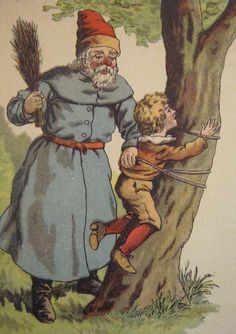
Bad Ass SantaIt’s December, and not only are the Holidays coming, they’re closer than you think if Hanukkah starts yours next week. If you’re not into either, then you get to bask in the idiocy. As for me, I simply let them rumble past like a runaway train, and if something happens to fall out of the caboose for me, so be it.  But if you believe the concept driving the season is peace and not what piece is for you, then here’s a few hints to let you know just how far behind you are:

1. The Great Work Stoppage – As soon as the Thanksgiving turkey comes out of the oven, it’s as if everyone forgets they have a job. Suddenly all meetings become holiday parties, and if you’re expecting that report to get finished, you might as well call back next year. In my particular milieu, I nearly have to hit my students over the head with their final exam to get them to even remember my name.

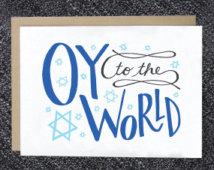
2. Vanishing Editors – If you were hoping to get your manuscript sold before the end of the year–ha ha, good one! From now until the end of the year, editors, as well as a fair amount of agents, take a breather and make the rounds of Gotham’s holiday celebrations, where I imagine a fair amount of deal making takes place over the babaganoush. If you’re the writer, think of it as a temporary reprieve from submission angst.Oy to the World!

3. Everything’s on Sale – Back in the day, you used to have to wait until after Christmas to get a price cut, but thanks to retail giants like Wal-Mart and Macy’s, the discounts only get deeper the closer you get to the big day. Which is fine, because if you’re like me, the shopping starts the day before, and I’m all about half-off.

4. The Dread Christmas Sweater – Think about it: if it wasn’t the holidays, would you ever wear that sweater in public? Do you actually like rick-rack, glitter, Rudolph’s battery-operated flashing nose, or cable-knitted Thomas Kinkade reproductions on your chest? So much better to wear the DCS’s less offensive cousins, The Christmas Socks. At least we only have to endure them when you cross your legs.

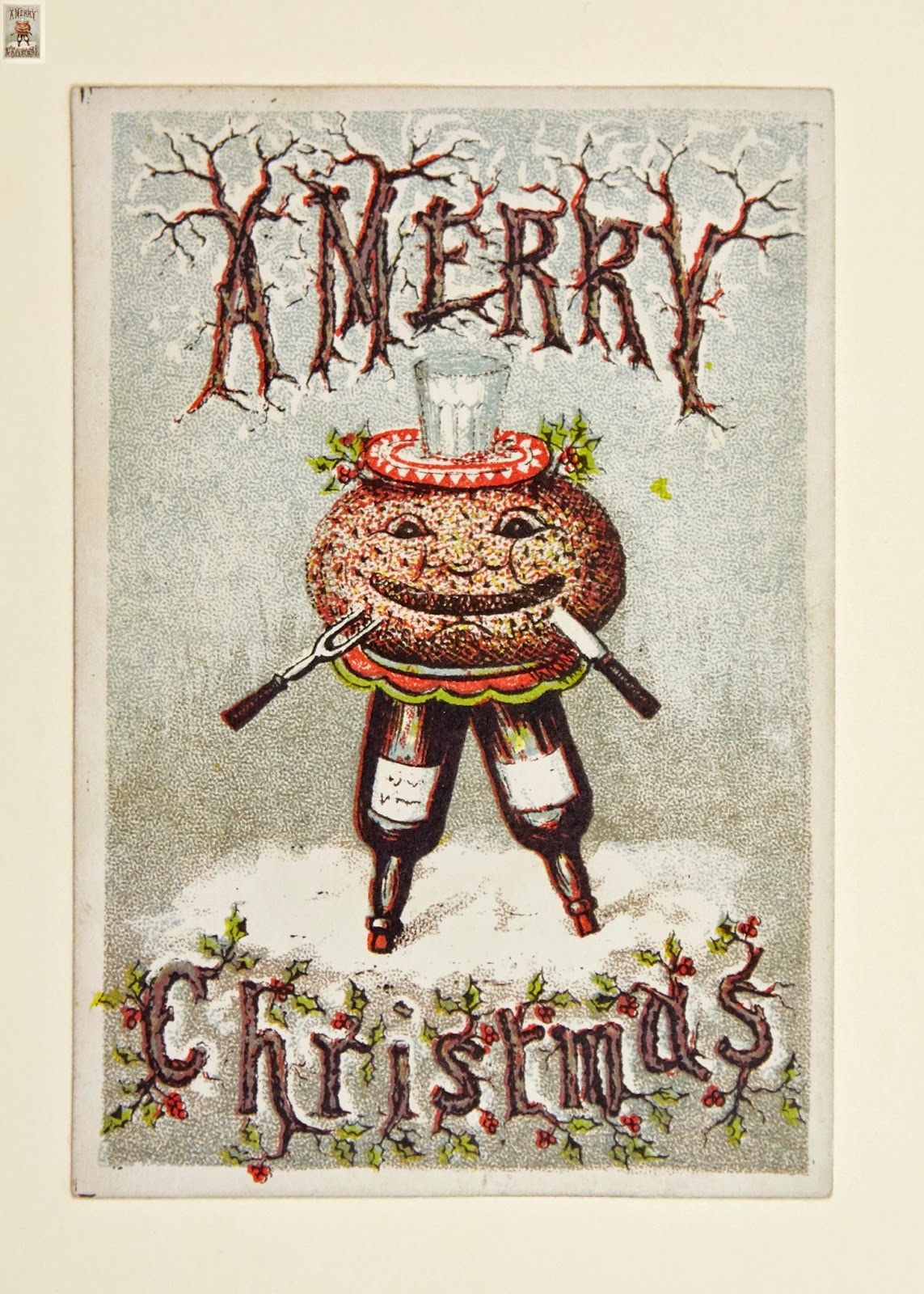
Creepy Christmas5. “Oh go ahead – it’s the Holidays.” – Which means, go ahead and eat that brandy cheesecake as big as your head. What the hell – you’re on Lipitor anyway, and your blood test isn’t until January. Which also means you can eat half that Hickory Farm’s beef stick, which is my personal holiday no-denial favorite. No fooling, I’m stocking up!

Only twenty-three days left. Get crackin’!


CYBER MONDAY MEANS LOVE ON THE CHEAP!

Wanted WifeCyber Monday means Bargain Romance at .99! But don’t think you aren’t getting your money’s worth. Take a look at what’s in store for Andy and Julie with a free Sneak Peek above, just under a buck at Amazon and Barnes & Noble and everywhere tomes of this genius are sold.

Get crackin’ kids! You don’t want to be the last on you block to be one of the in crowd!

Happy Thanksgiving

vintage-thanksgiving-boy-riding-turkey-with-american-flag1Don’t know what its subliminal message is, but this is the best Thanksgiving card I’ve seen in a while. I really do think it says it all. Have a great holiday, and pour one for me!

liberté, égalité, fraternité

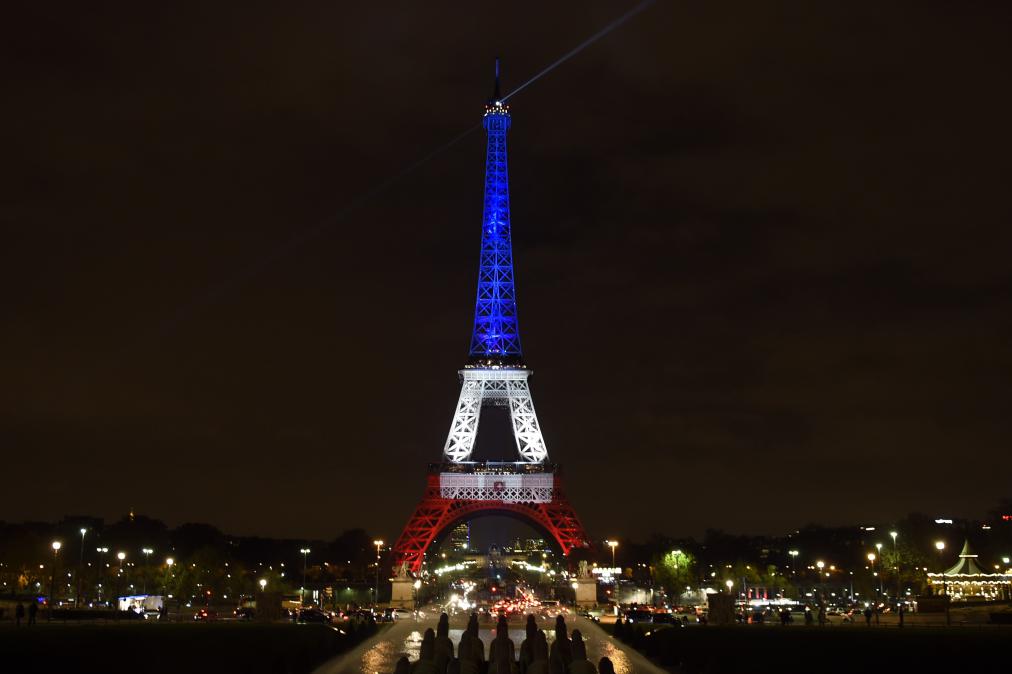
A photo taken on November 16, 2015 in Paris shows the Eiffel Tower illuminated with the colors of the French flag in tribute to the victims of the November 13, 2015 Paris terror attacks. AFP PHOTO / ALAIN JOCARD        (Photo credit should read ALAIN JOCARD/AFP/Getty Images)
A photo taken on November 16, 2015 in Paris shows the Eiffel Tower illuminated with the colors of the French flag in tribute to the victims of the November 13, 2015 Paris terror attacks. AFP PHOTO / ALAIN JOCARD (Photo credit should read ALAIN JOCARD/AFP/Getty Images)

A real ‘thank you for your service’

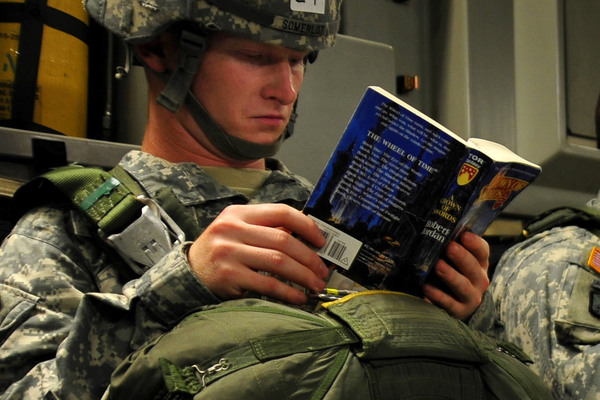
20120917193824-soldier-reading-bookThis Veterans’ Day, along with remembering the soldiers who served, let’s also not forget the ones who are still fighting the war. Yes, I say war, because there’s some who forget the fact our country is at war, has been for over twelve years now, and aside from the faded SUPPORT OUR TROOPS ribbon on the back of the occasional car, it’s as we’re suffering from a collective amnesia. But there’s real troops out there overseas, bored and scared and lonely, and really looking for a diversion that’ll take them away from an awful reality, if only for a little while. And there’s no better–and more portable–way to do that than sharing a book with a soldier. Here’s just a few ways you can do that…

  • Books for Soldiers: Once registered, you will be able to view the requests and send troops books, DVDs, games and relief supplies. You will also have access to our Pen Pal area and Post Card Jamboree. On average volunteers fill thousands of requests a month.
  •  Operation Paperback sends paperbacks to troops overseas.
  • Books-a-Million will let you select and purchase Books for Troops in a special program.

As the wife of a veteran let me say — many thanks!

Stop the creeping evil of apostrophe abuse!

It was a pretty innocuous thing. We were out of juice, and since Sweetie was going to the store that morning, I asked if he could pick up some. “Put it on my list!” he called from the shower, which he had left atop the microwave. So I went to it, idly glancing at what items he had already amassed: light cream, yogurt, bread, banana’s–

I stopped dead. Oh no – in my own home? I grabbed the list, storming into the bathroom. “Banana’s?!” I cried. “BANANA’S?”

He stared at me, washcloth in hand. “Right. Bananas. Jesus, what’s the problem?”

I could barely sputter the words. “Look!” I said, holding up the slip of pink scratch paper. “Right there!” I said, pointing to the tiny blip of blue ink between the third a and the s. “What’s that!”

“What’s what?” he said, squinting through soap and the shower curtain.

“THAT!” I said, flicking the teensy squiggle. “You put an apostrophe before the s! You did it to make a plural!”

He looked at me like I just grew a third eye. “No I didn’t. And if I did, I didn’t even think about it.”

My jaw dropped. “You didn’t even think about it? All your life you’ve been reading and writing and pluralizing words just fine and overnight, the rules of grammar change and you don’t even notice?! My God – it’s like aliens have abducted our collective grammatical knowledge! They must be planting billions of plural-snatching apostrophes in our brains while we sleep!”

He twisted a wad of washcloth into his ear, cocking a brow. “You want the bananas or what?”

It was all I could do to whimper. How did this happen? I saw a sign at an ice cream parlor the other day: Birthday Party’s Available. And at a fast food joint down the Shore: Best Burger’s on the Island! Granted, sometimes possessive apostrophes get sloughed away when the word grouping falls into popular parlance – Pikes Peak, is one, and in my home state of New Jersey, the town of Toms River, the county seat. But where did this aberrant pluralization come from? You can understand wanting to abbreviate by taking something away, but this is ADDING baggage. Unless, as in the case of Birthday Party’s, the writer was absent the day they gave a lesson on turning words that end in y’s (yes, this is correct according to the AP Stylebook) into plurals by adding -ies. No. That can’t be it. It’s just too widespread anymore. An epidemic. With no vaccine in sight.

Which can only lead me to one conclusion: it’s those darn aliens. So close your windows at night, keep a  Strunk and White at the ready, and a firm eye out for pods in the basement.


Ready…set…brilliance!

Vintage+woman+office+type+writerRecently I had shown my students several different ways to begin an essay. Instead of staring dumbfounded at a blank page (that is, if you’ve been blocked from echeat.com), I presented them with a few different starting techniques, such as posing a question, telling a story or exposing a fault in logic to name a few. Later on it led me to ponder what’s really the best way to launch a book? I’ve tried several techniques, but is there one sure-fire way?

After you’re writing for awhile you begin to settle into a few characteristic ways of doing things. Eventually they’ll be known as your “style.” Whether it’s a turn of phrase, a sense of irony, a humorous bent or any number of things indicative of your method of storytelling, your readers will recognize it and hopefully love it enough to come back to your work over and over. One of the most important indications of your style will be your opening, perhaps even your very first line. Depending on the genre, the opening is often approached in various ways, but I’m of the firm belief it should grab your readers from nearly the first line.

I once heard a comment from a genre writer that literary fiction is usually depressing.  Not that l believe this is true–I don’t–but one of its characteristics is a more variegated writing style that often takes longer to open. Many times the introduction is an unfolding, an intricate depiction of a landscape, situation or character. It could be more obtuse than easily recognizable, its meaning shaded by metaphor or symbolism. Often there’s an unreliable narrator or the characters appear doomed from the onset. The overall pace can be slower as there’s a lot more emphasis on the way something’s said, rather than on the speedy advancement of the plot. In fact, often there is no resolution, the story left open-ended so we could draw our own conclusion.

Not so much in genre writing. The lovers find their happily-ever-after, the mystery is solved, the planet is saved from destruction (actually, I don’t really know what happens in scifi; I’m just applying a happy ending with an intergalactic bent). And all this is initiated at a faster pace. Readers want the lovers to meet, the victim to die, and the alternate universe to appear as soon as possible. So how’s this accomplished? Why not try to–

Start in the middle – Forget the backstory and jump right into a situation already in progress. The cat’s up the tree, the car’s hit a pole, the cad’s been caught with the hussy–it’s all in your face and your protagonist hasn’t a clue how to deal with it. Dump them into a situation that’ll be hell to fix while sprinkling in backstory as the plot progresses. Think breadcrumbs along a trail.

Eavesdrop – Someone’s arguing or confessing or dishing over drinks, and there you are, a fly on the wall, privy to a candid conversation. Drop in a minimum of milieu and let your characters tell your readers what’s going on through their dialogue. Watch being overly explicit about what you say, though. Too much detail and your casual conversation can come off as an information dump. Divulge on a need-to-know basis.

Begin with the ending – One of the best examples of this technique is the 1950 movie classic by director Billy Wilder, Sunset Boulevard, starring Gloria Swanson and William Holden. The movie opens with Holden’s body floating face-down in a Beverly Hills mansion’s swimming pool, and in his own voice he tells you how he got there. It’s really not as anti-climatic as it seems as you’re dying (sorry) to know how he got that way. And if you apply this to writing a book, hey! they’ll be no angsting over how to end it.

That’s a just a few ways, and I’m sure there’s many more, but one thing’s for certain. If you don’t give your readers something to grab onto, they’ll be nothing to keep them turning the pages. The sooner you get them hooked, the easier it’ll be to pull them into the story and all the way through to the end.

Grow the hell up (and I’m not talking about your kids)

crying-baby-images-and-wallpaper-25As a college professor, I’m surrounded by young adults, and overall, they’re a lovely lot. I’m continually jazzed by their inventiveness, optimism and vitality, and 95% of the time, they’re a joy to be around. So what makes the other five percent such a slog? Ask any collegiate administrator, staffer or academic – it’s not the kids, it’s the parents.

Seeing that these parents are my contemporaries, they should know better.  Back during our college orientation days, we either got dropped off at the curb or the bus stop or arrived in our ten-year-old heaps (if we were even allowed, as freshman, to have cars on campus). For three days we usually stumbled around trying to manuever a confusion of classes, advisors, academic halls, tuition, textbooks and financial aid, not to mention mold-infested dorms, stinky communal bathrooms, unidentifiable food, the inevitable creepy roommate, all which were eventually placated by the awakened reality of unsupervised and unlimited sex, drugs and rock ‘n roll. There in July, amid a half-slumbering campus, armed with our SAT scores and a wad of summer job money, ready to be socked into our new local bank account, we’d get our first taste of independence, the Orientation not only a portend of college, but of a life we couldn’t wait to make on our own. But that was then.

Now has Joey and Suzy Campus following the Rents’ Family Volvo with their New Graduation Ride. First stop is the Family Picnic, where Mater and Pater pick up their own Orientation schedule. While Suzy is being tested and reevaluated, Mom and Pop are attending seminars on Separation Anxiety and Snowplow Parenting. Later on Dad goes to buy the textbooks, while Joey Campus is in his residential suite, sipping latte from the campus Starbucks as he sets up the webcam to Skype home every night, and Mom is transferring a grand or two into her little student’s Kampus Kash account. Some parents have been known to attend advisor meetings with the student, or at least try to, and one NJ campus reports an instance where a parent was asked to stop walking a student to the classroom. They’re trying to be nice about it but truly, they have but two words for parents: get out!

A-hem! Listen up, parental units: we are in danger of raising a nation of infants. Look, I know you want the best for your little darlings, want to wrap them in cotton wool and keep every nasty bugaboo far, far away, but for all your good intentions, this reality intrudes: if your son or daughter is over eighteen, and they are of sound mind and body, you are not legally responsible for them. If their car hits my car, I am going to sue them, not you. If they are in danger of failing, I’m not going to call you. As a matter of fact, my dean has expressly told all professors that we do not talk to parents. In fact, federal privacy laws stipulate that we not do so. If they are failing, if they owe money, if they don’t have their textbooks, if they don’t make it to class on time because you didn’t wake them up, that is THEIR problem. And I will not talk to you on their cell phone to tell you so.

There are too many in this generation that need to Man/Woman up. And it’s because the two most spoiled generations in history, the GenXers and the Baby Boomers, raised them that way. If we’re throwing up our hands at their self-serving, entitled ways, it is because we have created these scary monsters, with our own pushy, demanding, self-serving attitudes. But listen to this chunk of How It Really Is: there will be no coddling at my house. I’m the cold shower of reality. I don’t care if your mother forgot to upload your assignment. Don’t tell me it wasn’t your fault your alarm didn’t go off. Want to see me go off? Try passing the blame to someone else. For that, my dear, it really is all about you.

Hey, we’re all adults here, and I promise not to be condescending. Life’s a bitch, but it’s also very sweet, and I’m here to help with your transition. And I promise, whatever happens, I won’t tell your mother.