 By Grant Snider via GalleyCat and James Boog. This speaks to me, especially left-center, though I’m sure you writers out there can draw from it what you need. The New Yorker cuts worse of all. But still, I’m addicted. Heaven help me!
By Grant Snider via GalleyCat and James Boog. This speaks to me, especially left-center, though I’m sure you writers out there can draw from it what you need. The New Yorker cuts worse of all. But still, I’m addicted. Heaven help me!
 The other day I received in my inbox one of the most eagerly unanticipated of emails – the dreaded rejection. It wasn’t my first, and it most certainly will not be my last. In fact, it was another in a long, and happily broken line of such letters, which at this point in my career, totals well over one hundred. Through the years I’ve received all kinds, reaching back to the pre-electronic era: my own typed query with a rubber-stamped REJECTED across it, thrifty pre-printed postcards tucked into my SASE, crookedly off-centered-Xeroxed form letters, flyers inviting me to partake in the purchase of 1) editorial services, 2) how-to books, 3) seminars, even one with a large NO scribbled across the body of the letter. Of the electronic variety, I’ve received mainly cut-and-paste form emails, some three months after I submitted, to one within the hour. Several of these, especially of late, have been what is popularly known as good rejections, dismissals of a more personal nature, where the sender comments on what they liked and disliked about the work, more often than not praising the writing, but not “falling in love” with the story. Often the sender will point out the subjective nature intrinsic to all rejections, and wish you “the best of luck in finding a home/editor/agent for your novel/project/work.” Although rejections of this ilk are often sent with the kindest of cuts, because of the higher level of expertise the writer has demonstrated by the point, they’re usually the toughest rejections of all to take.
I’ve seen many a writer crumple in despair over such rejections, burn their manuscripts, erase their hard drives, lose themselves in a blurry of cheap liquor and even cheaper chocolate (yours truly suggests burrowing into a Himalaya-size pile of Tater Tots). Many vow to give up writing for good, and sometimes many do, at least temporarily, and often that’s a good thing. Because once the hurt and the anger and the self-deprecation subside, the writer can take a step back and look at the work objectively. Subjectivity aside, editors and agents, more than anything else, are professional readers, and if the work comes back over and over with similar commentary, maybe it’s time to take a look at that particular aspect of the story. In the same vein, the writer also has to consider where the work was sent and the editors’/agents’ preferred genres. Are you submitting mystery when the agent’s preference is sci-fi? Have you sent a novel query to an editor who usually publishes self-help? Have you taken a look at the agent’s clients? The editor’s list? Have you read the acknowledgement pages of works similar to yours to see who the author is thanking? You have? Then good, but let me ask you this: do you have multiple queries out there, or are you placing all of your literary eggs into the basket of one editor/agent?
If you are, you are most certainly setting yourself up for disappointment. Submission should be a very fluid process, and sending to one editor/agent at a time is akin to hitting a stop sign on every corner, causing your writing to lose momentum. For the most part, your writing life should have two very distinct entities – the creative and the practical, and as hard as it is to separate one from the other, the two should never align. Plus if you have multiple queries out there at once, the random rejection tends to lose its sting, and the dismissing editor/agent diminishes in importance. But most of all, you should never, ever let a rejection sink you so low that you lose faith in your abilities, a point where I’ll admit I have found myself. Instead of wallowing in dejection, ask yourself this: Who are these people who wield such power that I allow their judgment to supercede mine? Confidence in your talent will show through in your work, and you should always be exercising your writing muscle. As I tell my students, writers write, and no one was more surprised than me by my reaction to that latest rejection. Sure, it rattled me, but all I could think about was finishing the chapter I had been working on, which I did before I went to bed that night. To me, that meant I had lived through one more rejection, and had come out the other end, still a writer.
A while ago, when I was less confident, I had poured my heart out to my sister over one particularly brutal rejection. She told me of an article she had read in the New York Times about author James Lee Burke, and his fourth novel, The Lost Get-Back Boogie. By his own accounting, the manuscript was rejected by 111 editors over a nine-year period. When it was finally accepted and published, it went on to be nominated for the Pulitzer Prize. It’s now translated all over the world, and has gone into numerous printings. I never forgot that story, and many times it has kept me going. It made me think that one day, if I’m lucky enough, my own tales of desperation and abject failure will rally someone on to success. Only if!
Sex scenes are as integral to spicy romance as whipped cream is to sundaes (or to use-your-imagination), but quantity hardly speaks for quality. A proliferation of ins and outs and seductive banter are only the more apparent components of saucy scene-writing. Truth be told, there should be much more going on before the point of contact than during. A romance writer should never forget to keep an eye on the romance if she’s ever going to make the scene truly sensuous. So how to accomplish it?
Romance is mostly written by and for women, and because of that the prose has to be approached with their sensibilities in mind. Women take their cues from the images they form in their mind as their senses are acted upon, rather than visuals observed as men are more apt to do. This is the greatest difference I’ve noted between sex scenes written by male and female authors, and the biggest flaw when male authors get it wrong. (Not that it’s universal in male authors, as many get it exceedingly right. Ken Follett still writes the best sex scenes of any male author I’ve ever read. To see what I’m talking about, read Night Over Water.) Let me give you an example.
I once read a sex scene written by a man which included the male character receiving stimulation to a very male part of his anatomy. While the prose was quite good and very descriptive, the writer’s observations were not only in the male character’s point of view, but within the confines of a man’s sensibilities. He described the woman’s breasts and her voluptuous figure, as well as her lipsticked mouth gliding up and down him. He also described rather graphically how it looked when his climax reached its er…finish, using some very active verbs and sticky adjectives. I don’t know about you, but I was a tad put off by the scene’s ickiness, and I feel quite safe in saying there would be more than a few women who’d share my opinion. Now, while this would be considered just fine if it were written primarily for a male market, it doesn’t work for women, and I’ll tell you why.
Part of the explanation is obvious, as most heterosexual men would consider a description of a woman’s feminine pulchritude essential, while most heterosexual women would not. But it’s more subtle than that. When writing for a female audience (and I’ve found this point valid with lesbian romance as well), it’s more important to show not what the woman observes but what the character’s lover reacts to. Although she may be just as interested in the male’s anatomy and what he does with it, her senses are more roused by the male’s sexual reaction to her. The more arousing he finds the heroine, the more arousing it is for the female reader. Take male-centric scene mentioned above. Written for a female audience it could be just as sexually charged and graphic, but the focus would be more on how excited she felt doing it, as well as how passionate her partner reacted because of it.
Simply put, as far as the males are concerned in female-centric sex scenes, they should always be more aroused by their woman’s reaction to them, than by how they feel by the act alone. Every woman, no matter the shape or looks or age, wants to feel that she alone can cause her lover to lose it, her own uniqueness being the most potent aphrodisiac of them all.
 It was a pretty innocuous thing. We were out of juice, and since Sweetie was going to the store that morning, I asked if he could pick up some. “Put it on my list!” he called from the shower, which he had left atop the microwave. So I went to it, idly glancing at what items he had already amassed: light cream, yogurt, bread, banana’s–
I stopped dead. Oh no – in my own home? I grabbed the list, storming into the bathroom. “Banana’s?!” I cried. “BANANA’S?”
He stared at me, washcloth in hand. “Right. Bananas. Jesus, what’s the problem?”
I could barely sputter the words. “Look!” I said, holding up the slip of pink scratch paper. “Right there!” I said, pointing to the tiny blip of blue ink between the third a and the s. “What’s that!”
“What’s what?” he said, squinting through soap and the shower curtain.
“THAT!” I said, flicking the teensy squiggle. “You put an apostrophe before the s! You did it to make a plural!”
He looked at me like I just grew a third eye. “No I didn’t. And if I did, I didn’t even think about it.”
My jaw dropped. “You didn’t even think about it? All your life you’ve been reading and writing and pluralizing words just fine and overnight, the rules of grammar change and you don’t even notice?! My God – it’s like aliens have abducted our collective grammatical knowledge! They must be planting billions of plural-snatching apostrophes in our brains while we sleep!”
He twisted a wad of washcloth into his ear, cocking a brow. “You want the bananas or what?”
 It was all I could do to whimper. How did this happen? I saw a sign at an ice cream parlor the other day: Birthday Party’s Available. And at a fast food joint down the Shore: Best Burger’s on the Island! Granted, sometimes possessive apostrophes get sloughed away when the word grouping falls into popular parlance – Pikes Peak, is one, and in my home state of New Jersey, the town of Toms River, the county seat. But
  where did this aberrant pluralization come from? You can understand wanting to abbreviate by taking something away, but this is ADDING baggage. Unless, as in the case of Birthday Party’s, the writer was absent the day they gave a lesson on turning words that end in y’s (yes, this is correct according to the AP Stylebook) into plurals by adding -ies. No. That can’t be it. It’s just too widespread anymore. An epidemic. With no vaccine in sight.
Which can only lead me to one conclusion: it’s those darn aliens. So close your windows at night, keep a Strunk and White at the ready, and a firm eye out for pods in the basement.
 Recently I had shown my students several different ways to begin an essay. Instead of staring dumbfounded at a blank page (that is, if you’ve been blocked from echeat.com), I presented them with a few different starting techniques, such as posing a question, telling a story or exposing a fault in logic to name a few. Later on it led me to ponder what’s really the best way to launch a book? I’ve tried several techniques, but is there one sure-fire way?
After you’re writing for awhile you begin to settle into a few characteristic ways of doing things. Eventually they’ll be known as your “style.” Whether it’s a turn of phrase, a sense of irony, a humorous bent or any number of things indicative of your method of storytelling, your readers will recognize it and hopefully love it enough to come back to your work over and over. One of the most important indications of your style will be your opening, perhaps even your very first line. Depending on the genre, the opening is often approached in various ways, but I’m of the firm belief it should grab your readers from nearly the first line.
I once heard a comment from a genre writer that literary fiction is usually depressing. Not that l believe this is true–I don’t–but one of its characteristics is a more variegated writing style that often takes longer to open. Many times the introduction is an unfolding, an intricate depiction of a landscape, situation or character. It could be more obtuse than easily recognizable, its meaning shaded by metaphor or symbolism. Often there’s an unreliable narrator or the characters appear doomed from the onset. The overall pace can be slower as there’s a lot more emphasis on the way something’s said, rather than on the speedy advancement of the plot. In fact, often there is no resolution, the story left open-ended so we could draw our own conclusion.
Not so much in genre writing. The lovers find their happily-ever-after, the mystery is solved, the planet is saved from destruction (actually, I don’t really know what happens in scifi; I’m just applying a happy ending with an intergalactic bent). And all this is initiated at a faster pace. Readers want the lovers to meet, the victim to die, and the alternate universe to appear as soon as possible. So how’s this accomplished? Why not try to–
Start in the middle – Forget the backstory and jump right into a situation already in progress. The cat’s up the tree, the car’s hit a pole, the cad’s been caught with the hussy–it’s all in your face and your protagonist hasn’t a clue how to deal with it. Dump them into a situation that’ll be hell to fix while sprinkling in backstory as the plot progresses. Think breadcrumbs along a trail.
Eavesdrop – Someone’s arguing or confessing or dishing over drinks, and there you are, a fly on the wall, privy to a candid conversation. Drop in a minimum of milieu and let your characters tell your readers what’s going on through their dialogue. Watch being overly explicit about what you say, though. Too much detail and your casual conversation can come off as an information dump. Divulge on a need-to-know basis.
Begin with the ending – One of the best examples of this technique is the 1950 movie classic by director Billy Wilder, Sunset Boulevard, starring Gloria Swanson and William Holden. The movie opens with Holden’s body floating face-down in a Beverly Hills mansion’s swimming pool, and in his own voice he tells you how he got there. It’s really not as anti-climatic as it seems as you’re dying (sorry) to know how he got that way. And if you apply this to writing a book, hey! they’ll be no angsting over how to end it.
That’s a just a few ways, and I’m sure there’s many more, but one thing’s for certain. If you don’t give your readers something to grab onto, they’ll be nothing to keep them turning the pages. The sooner you get them hooked, the easier it’ll be to pull them into the story and all the way through to the end.

I’m always writing something. If it’s not this blog, I’m jotting into my journal (yes, paper, I still have one of those) or slaving away on one work-in-progress or another. While the first two are usually seat-of-my-pants entries, which to me, are about as much effort as launching into a brand new box of Skinny Cow Chocolate Truffle Bars (have you had these things? Almost orgasmic, and a ridiculous 100 calories! With NO artificial sweeteners either!!), lately my WIP has been leaving me somewhat frustrated. Granted, I’m not very far into it, only about thirty pages or so, but I’ve been so stuck on minutiae, examining every word and phrasing, that I’m hardly making any progress. Seems I just keep picking it apart and rewriting over and over, staring at it so closely and critically I can practically read the coding on the screen. I’m telling you, my inner editor has gone off the deep end, and it’s nearly driving me nuts. What’s a writer to do?
First, a little self-criticism, followed by a bit of analysis. Editing, intrinsically, is always a good thing. Seat-of-the-pants writing, or as I like to refer to it, verbal vomit, will only take you so far. It’s like making popcorn: you always end up with a lot of old maids (talk about an anachronism, but you know what I mean). If you don’t get rid of them, you’ll end of breaking your teeth, and in your writing, your rhythm. I tend to edit often as I write, re-reading line after paragraph after page in each writing session, and more often than not, I find a lot of superfluous prose I can trim away. Ultimately come up with cleaner, more elegant writing. The problem arises when the editing impedes me from getting further into my story, and I end up shaping and reshaping the same piece of clay so to speak, which is where I’m finding myself now. Why in blue blazes am I doing this?!
Now comes the self-analysis part. I’ve determined there are a few factors. I’m thinking because of school my writing schedule is a bit more erratic, so I’ve sort of lost my momentum. But I’m hardly one of those people out there who say they’re too busy to write because, personally, I never understood that. Usually I’m too busy not to write, as I’ve always found it a challenge to snatch blocks of time I could devote to writing, whether in the early morning hours, during breaks between classes or somewhere between dinner- and bedtime. As is the old adage: if you want something done, give it to a busy person. Applies to me, because truly, I’ve never missed a deadline, and I always get things done. So why now?
Perhaps it comes down to self-confidence, and maybe I’m lacking a bit at the moment, which I’m sure all writers wrestle with now and then. Sometimes we lack the conviction it takes to be confident in our abilities, and since writing is such a lonely exercise, it’s not as if we have a boss or coach standing over us prodding us on. Or maybe I’m a bit cowed by that Great Unknown that lies beyond those obsessively crafted words, but how will I know how truly wonderful I am if I don’t move past them? Writing means many different things to writers, but don’t let anyone ever tell you it doesn’t take courage to bring out in the open what we’ve created so deeply within us. Sometime I think it takes the courage of a soldier. And yet, we still do it, don’t we?
 Dear Editor,
I simply must tell you how fantastic you look today. I know your job is tough and you’ve been relentlessly busy, but honestly, it doesn’t show. You look fabulous. Quite the contrast to me as I’ve been working my fingers to the bone. Have these creative synapses been sparkin’ and how!
But that’s the way I roll. Banging out the genius day and night, living, eating, breathing. Sometimes it’s hard to contain but I eventually get it down. Love the pressure, too. I live for the deadline. Haven’t missed one yet. See, I’m all about honor: honoring deadlines, honoring advice, honoring the miraculous fact there are people out there who honestly want to read what I have to say. It’s an awesome concept. One I wouldn’t dare take lightly. Insert derriere in chair, remove pretension. And never, ever forget you’re only as good as your latest.
I would like you to believe I’m worth the risk. I’d work hard for you. I’m seasoned. I deliver. If there’s anything I believe it’s writers write. It’s what I do. I just can’t help myself. If there’s a writer’s dominant out there, I’m his bitch. See for yourself. You won’t be disappointed.
By the way, have I told you how fabulous you look today?
Many thanks,
Gwen Jones
 In a odd spate of convergence this week, my freshman students have an essay due based on the observations of writer and MIT professor Sherry Turkle, whose editorial appeared last Sunday in The New York Times. It’s Turkle’s contention in “Stop Googling. Let’s Talk,” that students as well as adult smartphone users should ask themselves the question, “What has happened to face-to-face conversation in a world where so many people say they would rather text than talk?”
Turkle uses data from a 2015 study by the Pew Research Center, stating that 89 percent of cellphone owners said they had used their phones during their last social gathering, even though 82% percent of the same adults felt using them somehow took away from the conversation. Counter that with the “rule of three,” or how a group of college students Turkle interviewed handle the use of devices in social settings. While conversing with six or so people at dinner, “you have to check that three people are paying attention — heads up — before you give yourself permission to look down at your phone. ” The idea is you can continue to converse “but with different people having their heads up at different times.” Turkle contends that this “rule of three” tends to keep conversation light, focusing mainly on topics where people feel they can drop in and out. By following the rule, the students say, ” You never have to be bored. When you sense that a lull in the conversation is coming, you can shift your attention from the people in the room to the world you can find on your phone.” But students also lamented the downside. As one college junior put it, “Our texts are fine. It’s what texting does to our conversations when we are together that’s the problem.”
Yet if you’re a writer, it’s not only your conversations that are suffering. Your writing is suffering, too. Because if all your talking is fluffy and all your observations are out of Instagram, Twitter, or Google, chances are your writing is as deep and as substantive as Jell-O. I once had someone ask me why a writer would interview people when she could get the same information online. Could she? Then from where did that information spring? From the info pixies? Too many of us rely on “research” done via online, because too many don’t want to do the heavy lifting that comes with face-to-face or real world interactions. I know of one popular writer of 19th century historicals who worked around this by first writing the book, then doing a quick online fact check before submitting. This same writer had an actual book published with a scene from the 1860s that featured a telephone. You could say that a simple Google search would have corrected that in a snap. But how could it when the writer didn’t know enough about the era to know what to check?
The point is a writer needs to be observant, to turn his or her attention away from the virtual and into the world going on around them. Honing the art of observation is the first skill a writer needs to master before they could ever strike a key to start a story. Ask yourself: Is Wikipedia is the first place you turn to for research, instead of that hot history geek bartender spouting random facts as he pours your Guinness? If it is, then maybe you need to look up from Tinder instead of just sitting there swiping left.
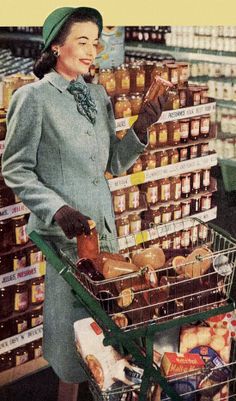 Where do story ideas come from? Do they drop like rain out of the sky, or sprout beneath our feet like crack-in-the-sidewalk weeds? Do they barrel into us like a runaway train, or slip into our consciousness like a movie’s product placement? Fact is, all of the above are correct. You just never know when a great story idea is going to hit you. But it’s also true you can’t wait for the Book Pixies to drop one into you lap. Great ideas have to be mined, and there are several places where you can start digging. For instance…
1. Look to History – This method is the easiest of all. Just pick up any history book, open a page and point, and there’s guaranteed to be a story in it. How many bestsellers have been written about World War II? The Civil War? (A certain radish-hurling Southern belle springs to mind.) Or the Napoleonic Wars and hello! the Regency period in England? Honesty, how many United States history books ever even mentioned the Prince Regent, “Prinny,” yet his era spawned a wildly popular American subgenre of romantic fiction. Imagine today forty years from now. Meet-cute on Tinder? Love it!
2. News Stories, slightly libeled – There used to be a popular movie trailer come-on that went, Ripped from today’s headlines! Which nowadays has been slightly altered to read, BASED ON A TRUE STORY. It’s the same thing, but honestly, that CNN home page or local newspaper (newspapers–remember them?) is still a great source for plots. In a further variation on the above history theme, don’t discount headlines of yesteryear, either. Writer Peter Benchley got an idea for his book, Jaws, from the 1916 New Jersey shark attacks that started on Long Beach Island. Who could argue with that success?
3. Family – Oh, yes, the original source of embarrassment and inspiration. How many of you have a weird Uncle Albert or Aunt Ada, the hoochie dancer, your father the war hero, your mother the self-made CEO of a multinational conglomerate (if you’re the latter, have her buy you a publishing company, and never worry about plot again). As for my own family, I have an original ‘49er, a nightclub singer, and a somewhat tenuous relation to Wyatt Earp’s brother, Virgil. Trust me, you never know.
4. Steal From Someone Else’s Story – Seriously, this is a viable option. Now, I’m not talking about opening up some New York Times bestseller and jacking right from the page. What I’m suggesting is taking a book in the public domain, and tell the story behind the story, what happens before or after, or from another character’s point of view. Jean Rhys prequeled Charlotte Bronte’s Jane Eyre with Wide Sargasso Sea, and more recently, March, by Geraldine Brooks, tells the story of the absent father gone-to-war of the March girls of Little Women. Who hasn’t read a book and thought about an unexplored secondary character and wondered what their story was? Now’s your chance to clear it up.
5. Take a Walk – Any walk, anywhere, from your own street to a street far, far away. Take in the sights, the sounds, the buildings and the people, sit on a bench in a park, in a cafe, on a bus, at a museum, on a beach, by a lake, on an observation deck. If you can, do it alone to keep distractions at a minimum, allowing yourself to absorb everything that floats, waltzes or rolls past you. Leave the phone turned off and the ear buds in your pocket, and let the milieu do the talking. You’ll be amazed at what it tells you.
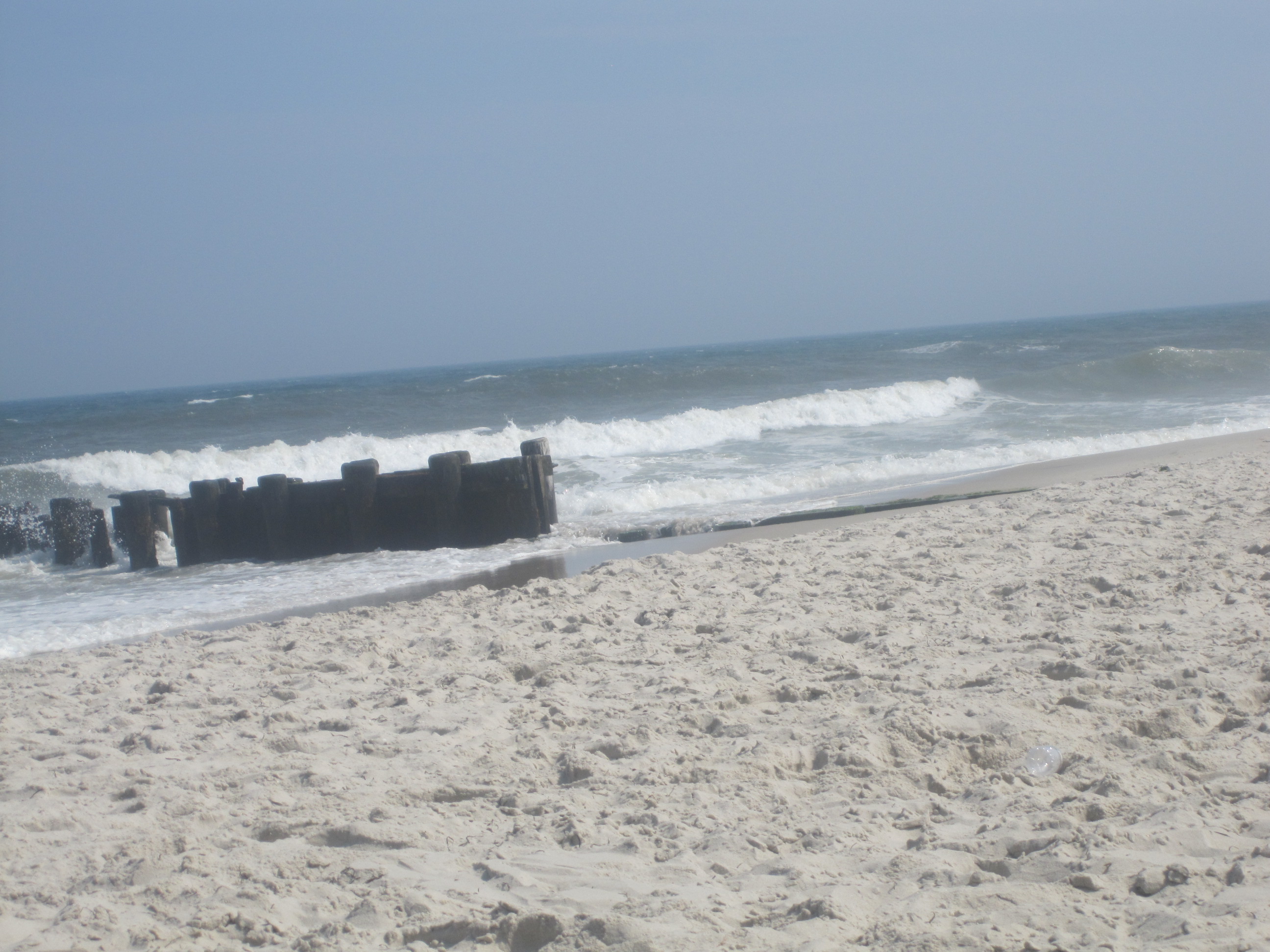 This week while I’m running around getting ready for classes to start next Tuesday, I came across this photo, and right away I started pining for the beach. It’s been a hell of a summer for me, and the fact I haven’t had my toes in the sand since Fourth of July weekend has left me a bit addled. You see, at least for this writer the beach, or rather the Shore as we say in New Jersey, is an essential muse to my literary existence, and here are five reasons why…
1. The Horizon – Stressed? Have a bit of the old block? I’ll tell you, there’s nothing like zoning out at the beach. You sit your fanny in a chair, bury the toes, slide on your shades and simply fix your sight on the horizon. By the time your gaze glides past the sand and surf and out over the water, your blood pressure’s dropped twenty points. After a few minutes your mind blanks and oh boy, do the ideas start flowing. Compound that if you’ve got your fingers clamped around a Yuengling.
2. The Surf – Still stressed? Dive in. This is especially effective if the water’s particularly rough that day. There’s nothing like a wave ass-whooping to bust the kinks out of those tense muscles. In fact, it’s practically mandatory for an effective day on the beach. Why? Because a dip is an absolute precursor to the…
3. Beach Nap – You’re heaving like a busted bellows, there’s sand in your crotch, and your hair looks like the wet mop coming out of Nardi’s men’s room after a Saturday night. So the only thing left to do is fall on your face and pass out under the sun. Let me tell you, I’ve solved more plot problems through the bizarre REM dreams I’ve had during these snooze sessions. Or maybe they weren’t. Hmmm…
4. Chat ‘n Chew – More often than not I have a friend or two (or three or four) along with me as a I sit on the beach, and often that friend or two are fellow writers. I cannot tell you how many books were started or finished in that rumpled milieu, whole characters developed, titles created, contracts debated. Often these brainstorming sessions are aided by a new pack of Twizzlers, various summer fruits – peaches, watermelon, plums, etc – as well as the mandatory chips ‘n dip. Inevitably, this is supplemented with the Red Carpet chatter that ensues watching the various forms of scantily-clad humanity plodding near the shoreline, invoking even more spirited discussion. Oh–the stories we can weave!
5. And then, as I look to the West… – As our day on the beach comes to a close, and we trod homeward, after we shower, barbecue and before we hoist a few more Yuenglings, we venture to the other side of the Island and Barnegat Bay. In a blaze of red, gold and orange, the sun sets, staining a path across the water, eliciting oohs and aahs. And if that isn’t inspirations, well, I just don’t know what.

 Gwen Jones Writes